Marine pumps are critical to the operation of commercial fishing vessels — supporting refrigeration, sea water cooling, bilge and ballast systems, and auxiliary services. On working boats where uptime directly affects catch quality and revenue, biofouling and cavitation are two of the most common, yet preventable, causes of pump performance loss and premature failure. This article explains how those failure modes develop, how they affect pump reliability, and what owners and fleet managers can do through inspections, material selection, and engineering controls to reduce downtime.
The guidance is intended for vessel owners, fleet managers, and marine engineers responsible for refrigerated sea water (RSW) systems, onboard refrigeration, and general shipboard pumping systems. It focuses on operationally practical steps — inspection protocols, anti-fouling strategies, impeller and material choices, controls and retrofits — that deliver measurable improvements in reliability and lifecycle cost.
Understanding the Challenge
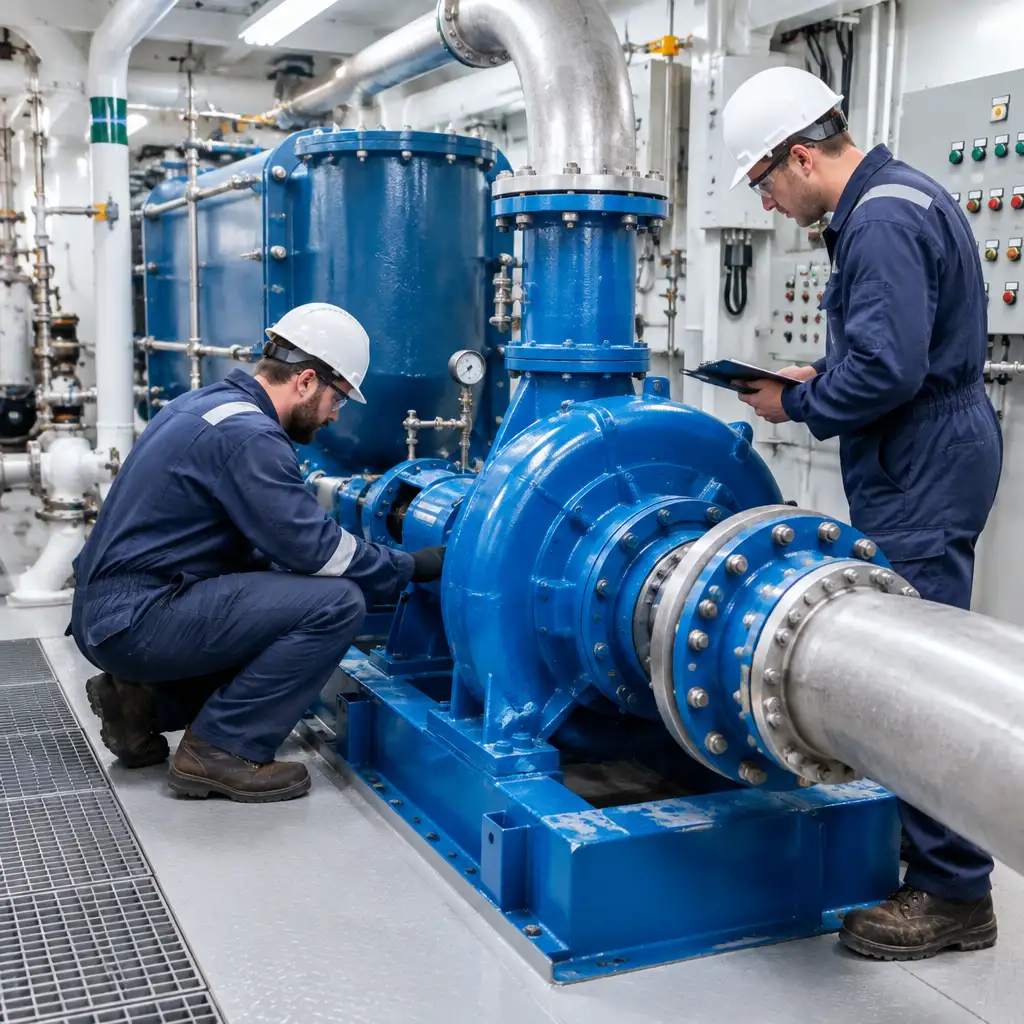
Biofouling is the accumulation of biological material — algae, barnacles, mussels, and microbial films — on wetted surfaces. On a vessel, biofouling commonly appears in sea chests, strainers, suction lines, and pump impellers. Even thin layers of biofilm increase surface roughness and reduce flow, which raises the risk of cavitation when local pressure drops below the vapor pressure of water.
Cavitation occurs when vapor bubbles form and collapse on pump surfaces due to local pressure variations. Collapse events generate shock waves that pit impeller surfaces, erode clearances, vibrate bearings, and eventually degrade seals and shafts. The result is loss of head, dropped flow rates, higher motor loads, and unplanned maintenance.
On commercial fishing vessels these problems are compounded by variable sea conditions, long low-speed transits, and operations in nutrient-rich coastal waters where fouling organisms thrive. In refrigeration applications such as RSW systems and brine chillers, even minor reductions in pump performance can compromise cooling capacity and product quality.
Why It Matters
Operational impacts of biofouling and cavitation range from reduced efficiency to catastrophic component failure. Reduced flow in circulation pumps means compressors and heat exchangers must work harder, increasing fuel and electricity consumption and putting refrigeration systems at risk. For vessels running multiple pumps, a single failing pump can cascade into system imbalance and lost cooling capacity.
Downtime in the middle of a fishing trip carries direct financial consequences: spoiled catch, missed delivery windows, and diversion to port for emergency repairs. Replacements at sea are limited to available spares, and complex repairs often require haul-out or dockside service. A focused preventive approach typically costs far less than emergency responses.
From an asset-management perspective, repeated cavitation and biofouling accelerate wear on impellers, casings, and motors, shortening equipment life and increasing total lifecycle costs. Addressing these issues proactively improves reliability while reducing parts consumption and labor hours spent on repairs.
Common Causes or Industry Considerations
Understanding the root causes helps target mitigation efforts. Key contributors include:
- Poor intake design: undersized sea chests, inadequate strainer area, or long suction runs increase friction losses and reduce Net Positive Suction Head (NPSH).
- Infrequent inspections: small fouling deposits grow rapidly if not removed routinely, especially in warm waters.
- Inappropriate materials: soft metals or coatings that promote organism attachment or that are easily eroded by cavitation will fail sooner.
- Off-design operation: pumps running significantly away from Best Efficiency Point (BEP) have a higher propensity for cavitation.
Below is a simple comparison of common impeller and casing material choices and their advantages for fouling and cavitation resistance.
| Material | Benefits | Considerations |
|---|---|---|
| Bronze (Naval) | Good corrosion resistance, repairable, common in retrofit parts | Can encourage bio-attachment if rough; limited cavitation resistance vs stainless |
| 316/904L Stainless Steel | Higher hardness, better cavitation and erosion resistance, smoother surfaces | Higher cost; galvanic considerations when paired with other metals |
| Composite/Polymer | Low adhesion for some organisms, corrosion-free, often quieter | Varied performance under cavitation; temperature and chemical limits |
Engineering or Operational Solutions
Successful mitigation usually blends design changes, materials selection, and operational controls. Consider these engineering and operational solutions:
1) Intake and suction improvements: Increase strainer area, shorten suction piping, and reduce sharp bends. A properly sized sea chest and low-resistance strainer lowers suction losses and improves NPSH margin. In many retrofit cases, a larger perforated sea chest screen or duplex strainer reduces clogging risk.
2) Impeller and casing selection: For pumps handling seawater and RSW, hardened stainless steel impellers with polished surfaces resist both cavitation erosion and bio-attachment. Where weight and cost matter, engineered composites with anti-fouling surface finishes can be effective for specific services.
3) Anti-fouling strategies: Mechanical and chemical approaches combined are most effective. Regular strainer cleaning, scheduled diver inspections of sea chests, and the use of non-biocide anti-fouling coatings or cathodic solutions can limit attachment. In some fleets, periodic in-water cleaning during scheduled port calls prevents heavy buildup without dry-docking.
4) Control system upgrades: Installing Variable Frequency Drives (VFDs) and soft-start motor controls helps maintain pumps near BEP and allows smooth ramping that reduces transient cavitation risks. VFDs also enable intelligent flow control and reduce power draw, which can extend motor life and lower fuel consumption.
5) Monitoring and sensors: Pressure transducers on suction and discharge, vibration sensors, and flow meters provide early warning of developing cavitation or flow restrictions. Alarms tied into the vessel control system enable crews to take corrective action before damage occurs.
Best Practices
Instituting practical, repeatable practices reduces risk and simplifies maintenance planning. Key best practices include:
- Routine visual and hands-on inspections: Weekly strainer checks and monthly sea chest inspections during active fishing seasons.
- Preventive cleaning schedules: Establish cleaning intervals appropriate to the operating area (tropical vs. temperate waters), and track fouling rates with simple logs.
- Spare parts strategy: Stock critical spares — impellers, mechanical seals, shaft sleeves, and pre-cut gaskets — to allow field swaps without extended downtime.
- Operational training: Teach crews to recognise cavitation signatures (noise, vibration, reduced flow) and to adjust pump speed or isolate affected circuits safely.
- Documentation: Maintain an equipment history that links operating hours, inspections, and repairs to help refine maintenance intervals and parts forecasts.
For refrigeration-specific systems, prioritize redundancy for circulation pumps supporting RSW and brine chillers so that a single pump service event can be performed without compromising cooling capacity. Where possible, implement duplex or triplex pumping arrangements with cross-over valves to allow in-service maintenance.
How NEMES Helps
NEMES provides integrated support that aligns with the engineering-first approach ship operators need. Our team can assist with equipment selection and system design through equipment sales and engineering consultation to specify impellers, casings, and control upgrades appropriate for your vessel and operating profile.
Our New Bedford marine and industrial marine supply store stocks common replacement components and consumables so crews have access to in-stock parts and technical advice at the counter. For complex sourcing needs, we leverage manufacturer relationships to find OEM-equivalent components.
When on-site support is required, NEMES offers responsive field service capabilities — from preventive maintenance and diagnostics to emergency repairs and retrofits. Our technicians perform pump surveys, vibration analysis, and assist with VFD integration and control tuning to reduce cavitation risk.
We also support longer-term reliability projects, including sea chest redesigns, anti-fouling strategies, and preventive maintenance programs that reduce unplanned visits to port and minimize lifecycle costs. Our engineering team coordinates with operators to balance durability, cost, and serviceability.
Frequently Asked Questions
What inspection frequency reduces the risk of severe biofouling?
For vessels operating in warm, nutrient-rich waters, weekly strainer checks and monthly sea chest inspections are a practical baseline. In colder or low-fouling regions, intervals can be extended but should be based on observed fouling rates documented in an inspection log.
Can coating or anti-fouling paints prevent cavitation damage?
Anti-fouling coatings reduce organism attachment but do not prevent cavitation. Cavitation is a hydraulic phenomenon; the best preventive measures are improving NPSH margin, operating pumps near BEP, and using cavitation-resistant materials. Coatings help maintain smooth surfaces that reduce turbulence and marginally improve performance.
Is switching to stainless steel impellers always the best option?
Stainless impellers improve erosion resistance and are preferred for heavy-duty seawater service, but they come at higher cost and require corrosion control planning. Composite impellers can be advantageous where weight and corrosion are concerns. Material selection should follow an engineering assessment of the application.
How do VFDs help reduce cavitation on board?
VFDs enable speed control that keeps pumps operating near their Best Efficiency Point, reducing the likelihood of low-pressure conditions that cause cavitation. They also provide soft-start capability which avoids sudden transients that can induce vapor formation.
What spare parts should every vessel carry to handle pump failures at sea?
At minimum carry a spare impeller, mechanical seal kit, shaft sleeve, gaskets, and commonly used bearings. Stocking a spare pump or a cartridge-style replacement assembly for critical circuits (like RSW circulation) is recommended for vessels where downtime is highly disruptive.
Conclusion
Biofouling and cavitation are manageable risks when vessel owners and fleet managers combine routine inspections, considered material selection, and targeted engineering controls. Improving intake design, selecting the right impeller materials, adding monitoring, and adopting VFDs where appropriate will reduce emergency repairs, improve system efficiency, and extend equipment life.
Operational discipline — documented inspection routines, spare parts provisioning, and crew training — turns intermittent fixes into sustained reliability gains. The result is fewer unscheduled port calls, more consistent refrigeration performance for catch quality, and lower lifecycle costs for pump systems.
Every vessel and operation is different. If your fleet is seeing signs of cavitation or rapid biofouling, an engineering assessment focused on NPSH, impeller material, and operational controls will identify the most cost-effective interventions.
Disclaimer: The guidance in this article is educational and reflects best practices. Specific vessel conditions and equipment variations require tailored engineering evaluation.
Commercial vessels depend on reliable equipment every day. From refrigeration and electrical systems to pumps, controls, and onboard equipment, NEMES provides engineering expertise, quality products, and responsive service to help keep your vessel operating efficiently. Call (800) 540-8893 or email info@nemesinc.com for marine engineering, equipment, or service assistance.