Shipboard electrical fires are among the most disruptive and dangerous incidents a tugboat fleet can face. For fleet managers and marine engineers, preventing these events requires a blend of focused engineering controls, disciplined preventive maintenance, and informed investment decisions. This article explains common causes of shipboard electrical fires, signs that an electrical system needs upgrading, practical engineering controls to reduce risk, and the business case for spending to avoid extended downtime and liability.
Throughout, we reference practical measures and decision points relevant to marine electrical systems, variable frequency drives, battery chargers, switchboards, and other onboard electrical equipment. For parts and components during inspections or retrofits, a well-stocked marine supply store with shipboard cables and replacement components can shorten repair windows and support preventive maintenance strategies.
Understanding the Challenge
Shipboard electrical fires typically originate from overloaded circuits, degraded conductors, poor terminations, unprotected distribution, or heat buildup in confined machinery spaces. Tugboats operate in harsh marine environments—salt spray, vibration, temperature swings, and tight spaces—all of which accelerate wear on electrical systems. Marine electrical discipline requires specifying equipment for the environment and installing it with appropriate protection to reduce ignition risk.
For fleet managers, the challenge spans design, operations, and lifecycle support. Engineering decisions (cable type, overcurrent protection, ventilation) interact with day-to-day practices (load management, inspections, and maintenance). Without systematic attention to both, small defects become ignition points that can escalate quickly into a fire that threatens crew safety and vessel availability.
Why It Matters
The costs associated with shipboard electrical fires extend beyond repair bills. Fire damage can render a tugboat out of service for weeks, interrupt contracts, and trigger liability claims. A serious fire may also lead to regulatory scrutiny and increased insurance premiums. Fleet managers must evaluate investments in upgrades and preventive maintenance against the tangible risks of extended downtime and reputational loss.
Operational continuity matters for towing schedules, harbor support, and emergency response. Investing in marine electrical reliability protects revenue streams and reduces unexpected downtime. Additionally, a disciplined maintenance program and appropriate engineering controls directly improve safety for crew and cargo while lowering lifecycle costs of electrical assets like motors, VFDs, and switchgear.
Common Causes or Industry Considerations
Understanding how fires start informs mitigation. Common contributors on tugboats include:
- Insulation deterioration and chafed shipboard cable from vibration and abrasion.
- Loose or corroded terminations creating high-resistance joints that overheat under load.
- Undersized conductors or overloaded circuits due to added equipment without system re-evaluation.
- Inadequate overcurrent protection or slow fault-clearing devices allowing sustained overheating.
- Poor ventilation in engine rooms or electrical enclosures trapping heat and accelerating insulation breakdown.
- Water ingress and corrosion in junction boxes, switchboards, or control panels causing shorts and arcing.
Industry considerations specific to tugs include compact engine-room layouts, frequent short-duration high-load cycles (e.g., winches and thrusters), and added aftermarket equipment. These conditions make it especially important to plan for derating, mechanical protection of conductors, and routine inspections timed to vessel operating schedules.
Engineering or Operational Solutions
Engineering controls form the first line of defense against shipboard electrical fires. Key focus areas include cable selection, secure terminations, overcurrent protection, and ventilation:
Cable Selection and Routing
Select cable rated for marine use with appropriate insulation (e.g., XLPE or marine-grade insulation) and consider armour or conduit where mechanical damage is likely. Respect ampacity and derate for ambient temperature, bundling, and proximity to heat sources. Route cables to avoid chafe points and isolate power runs from fuel and hydraulic lines.
Secure Terminations and Connections
Tight, corrosion-resistant terminations prevent the high-resistance joints that generate heat. Use marine-rated lugs, proper torque values, and appropriate anti-corrosion compounds where recommended. Consider routine re-torque checks in preventive maintenance schedules, particularly for high-current connections.
Overcurrent Protection and Coordination
Properly sized breakers and fuses protect conductors and equipment. Implement selective coordination so faults are isolated quickly and only the affected circuit is interrupted. For equipment like VFD-driven winches or thrusters, consider short-time delay devices to avoid nuisance trips while still protecting against sustained overloads.
Ventilation, Heat Management and Enclosures
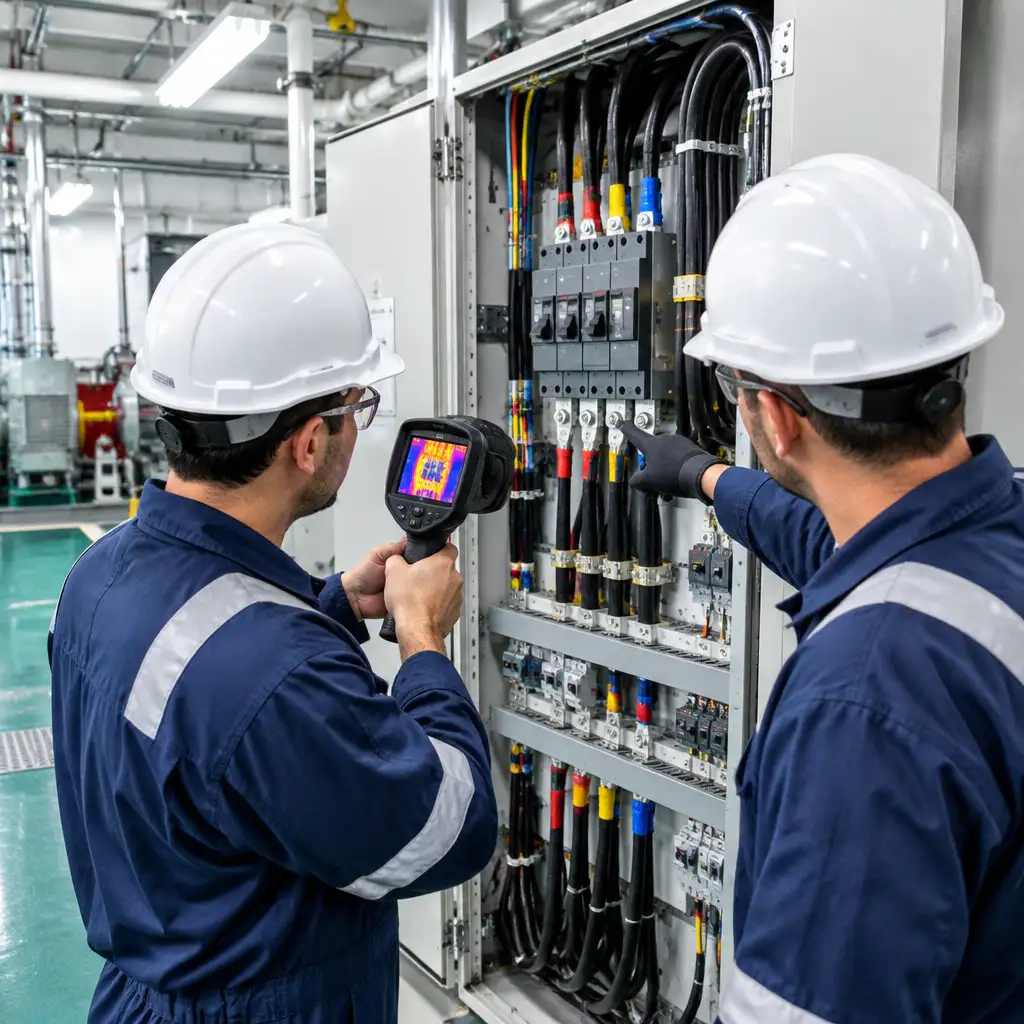
Ensure engine-room ventilation provides adequate cooling for switchboards, batteries, and control panels. For enclosed electrical cabinets, use forced ventilation or heat exchangers when passive cooling is insufficient. Thermal monitoring (infrared surveys or fixed-temperature sensors) helps identify hot spots before they become failure points.
Supplementary Controls and Detection
Arc fault detection devices, heat sensors in cable runs, and smoke/temperature detection in electrical spaces add layers of protection. While these systems increase upfront cost, their ability to provide early warning often prevents minor faults from escalating into fires. Ensure detection devices are rated for marine use and integrated into alarm systems for prompt crew response.
Best Practices
Operational best practices complement engineering controls and are essential for reducing the likelihood of shipboard electrical fires:
- Implement a written preventive maintenance plan covering inspections, torque checks, insulation resistance tests, and thermal scans.
- Schedule routine infrared thermography during normal operating loads to identify hot spots in live equipment.
- Document modifications and additions to the electrical system; re-evaluate load capacity and protection when new equipment is added.
- Train crew and technicians on safe electrical practices, recognizing signs of overheating, and initial firefighting procedures specific to electrical fires.
- Keep a well-organized onboard inventory of critical replacement parts (fuses, lugs, heat-shrink, cable) and establish rapid access to a reliable marine and industrial supply to shorten repair lead times.
Maintenance intervals should be risk-based: higher-use vessels or those operating in harsher environments demand more frequent checks. A formal condition-assessment process helps prioritize capital upgrades versus targeted repairs.
| Component | Risk | Mitigation |
|---|---|---|
| Shipboard cable | Chafe, moisture, thermal overload | Use marine-rated, armoured cable; protective conduit; proper routing |
| Terminations | Loose joints, corrosion | Torque to spec, use corrosion inhibitors, periodic rechecks |
| Switchboards | Heat buildup, overloads | Ventilation, thermal monitoring, coordinated protection |
| VFDs & controls | Harmonics, nuisance faults | Appropriate filtering, surge protection, correct sizing |
How NEMES Helps
NEMES combines engineering, equipment sales, supply, and field service to support fleet managers through every step of electrical fire prevention. Our engineering consultation evaluates existing switchboards, distribution feeders, and VFD installations to identify risk areas and recommend targeted upgrades or replacements. We support equipment selection and equipment sales with specification-grade components from trusted manufacturers and help plan installations that comply with marine electrical discipline.
Our field technicians perform preventive maintenance, thermal imaging, torque audits, and on-site troubleshooting to find hidden issues before they cause failures. For parts and rapid repairs, the New Bedford supply counter stocks shipboard cable, lugs, breakers, and other replacement components and can source hard-to-find items through our manufacturer partnerships. When systems require a coordinated service response, our technicians provide installation support and emergency repairs as needed.
As an engineering-led partner, NEMES helps fleet managers weigh lifecycle costs versus upfront investment—showing when upgrades such as arc-fault detection, improved ventilation, or modernized switchgear will reduce downtime and long-term liability. Learn more about our field service capabilities and how our integrated approach to preventive maintenance and emergency service keeps tugboats operational.
Conclusion
Preventing shipboard electrical fires on tugboats requires both sound engineering choices and disciplined operational practices. Focus on selecting marine-grade cables and terminations, ensuring properly coordinated overcurrent protection, maintaining adequate ventilation, and implementing detection systems where practical. Coupled with a proactive preventive maintenance program—thermal imaging, torque checks, and documented system changes—these measures significantly reduce the risk of ignition and minimize expensive downtime.
Investments in upgrades should be evaluated as risk-reduction measures that protect crew safety, reduce liability, and preserve operating revenue. When a vessel requires parts or technical support, an integrated partner that offers engineering consultation, equipment recommendations, supply capabilities, and responsive field service provides the most efficient path to restoring and sustaining reliable operations. For next steps, contact NEMES to discuss system assessments, preventive maintenance planning, and equipment selection tailored to your tugboat fleet.
For additional assistance, please contact NEMES to request technical assistance or to schedule an evaluation.
Frequently Asked Questions
Q: What are the early warning signs of a potential electrical fire onboard?
A: Look for discoloration or melting at terminations, persistent nuisance tripping, unusual odors (hot insulation), hot surfaces detected during routine checks, and inconsistent performance of electrical equipment.
Q: How often should thermal imaging inspections be performed?
A: For tugboats with frequent high loads, thermal scans every 6–12 months are advisable; vessels in harsher conditions or with known issues may require quarterly checks.
Q: When should I replace shipboard cable instead of repairing it?
A: Replace cable when insulation damage, repeated repairs, or significant ageing compromise dielectric strength, or when the cable no longer meets capacity and environmental requirements for the application.
Q: Are arc-fault detection devices practical for tugboat installations?
A: Yes—when selected and installed correctly, arc-fault detection adds an early layer of protection in critical cable runs and enclosures, especially where human access or critical loads are present.
Q: What maintenance tasks provide the highest ROI for preventing electrical fires?
A: Torque checks on high-current connections, infrared thermography, documented load reviews after modifications, and ingress control (sealing junctions) are high-impact, relatively low-cost measures.
Routine maintenance can extend equipment life and reduce the risk of unexpected failures. If you’re developing a preventive maintenance strategy or evaluating aging equipment, NEMES can help you keep critical systems operating at their best. Call (800) 540-8893 or email info@nemesinc.com to discuss preventive maintenance support.