We’ll cover typical causes of RSW failures, engineering solutions for pumps, leak detection, and controls, and provide vessel case examples and a concise at-sea inspection checklist. Throughout, the emphasis is practical: how to detect issues early, which retrofits deliver measurable reliability gains, and how to balance lifecycle cost against operational risk.
Understanding the Challenge
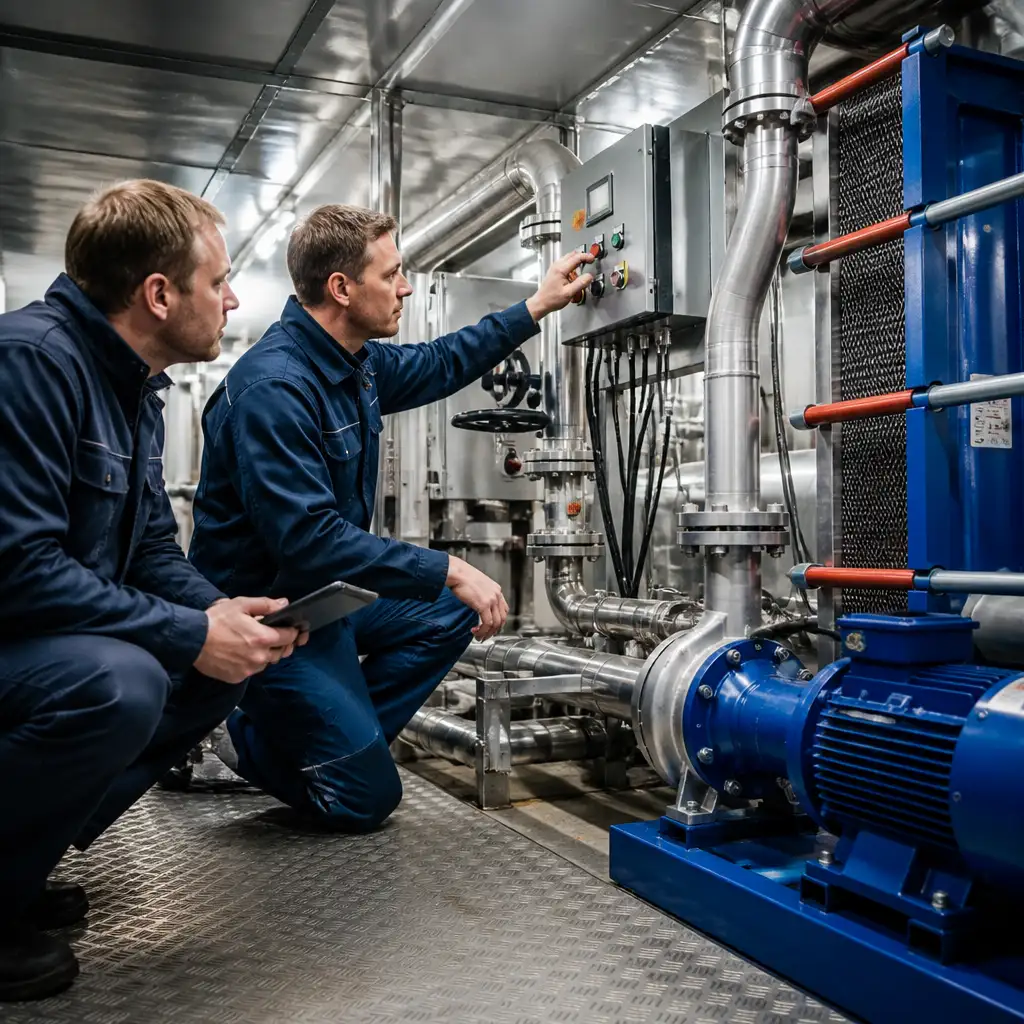
RSW systems circulate chilled seawater through fish holds to maintain even temperatures around the catch. The combination of seawater chemistry, suspended solids, biological growth, and continuous flow means components face accelerated corrosion, cavitation, fouling, and mechanical wear. Pumps, strainers, heat exchangers, and sensors are exposed to conditions that routinely shorten their expected life compared with freshwater or closed-loop industrial systems.
From an operational perspective, a single RSW component failure—an impeller eroded by sand, a corroded heat exchanger tube, or a failed temperature sensor—can quickly cascade into higher water temperatures, bacterial growth, and irreversible spoilage. Effective RSW system troubleshooting therefore requires an integrated view of refrigeration, pumping systems, controls, and hull-side plumbing.
To begin troubleshooting, operators should combine simple at-sea checks with periodic engineering diagnostics: measure flow and delta-T across the hold, verify pump vibration and amperage, inspect strainers and anodes, and validate control loop performance. Where problems recur, consider engineering upgrades rather than repeated repairs; retrofits often reduce recurrent failures and limit operational downtime.
Why It Matters
Operationally, the stakes for commercial fishing fleet managers are clear: spoilage translates to lost product value, diminished buyer confidence, missed quotas, and expensive unplanned port calls for repair or offload. From an engineering and financial standpoint, recurring RSW failures increase lifecycle costs through emergency repairs, overtime labor, expedited parts shipping, and lost fishing days.
RSW reliability also affects crew safety and vessel scheduling. Rapid temperature excursions force hurried transshipments and can lead to unsafe work practices during emergency repairs. Investing in targeted engineering improvements reduces these risks and often pays back quickly through fewer interruptions, lower emergency-service expenses, and reduced spoilage rates.
Finally, reliable RSW systems contribute to compliance with buyer specifications and seafood safety standards by maintaining consistent product temperatures from catch to landing—critical for premium markets and long-haul distribution.
Common Causes or Industry Considerations
Understanding the root causes of RSW failures guides effective troubleshooting. The most common contributors include:
- Pump and impeller wear: abrasive particles, cavitation, and electrochemical corrosion reduce hydraulic performance.
- Strainer and piping blockages: marine debris, ice, and biological growth restrict flow and increase pump load.
- Sensors and controls drift: temperature and level sensors fouled by salt or biofilm provide inaccurate feedback to control systems.
- Heat exchanger fouling: shell-and-tube or plate heat exchangers accumulate scale and biological films, reducing cooling capacity.
- Electrical and motor failures: salt corrosion on terminals, moisture intrusion, and overloaded motors cause failures of drive systems.
- Undetected leaks and ingress: small leaks in immersed piping or flanged joints reduce system capacity and introduce contamination risks.
Some vessel- and operation-specific considerations affect failure modes: nearshore fishing grounds with high silt will accelerate pump and heat exchanger wear; vessels that run RSW 24/7 without scheduled downtime typically see faster control and motor failures; older vessels may use obsolete parts that are difficult to source, increasing repair downtime.
Recognising these patterns allows fleet managers to prioritise retrofit investments—upgrading a pump and adding a VFD can deliver faster payback on a silt-heavy route, while modern sensor and leak-detection upgrades are high-value on long trips for high-value species.
Engineering or Operational Solutions
When troubleshooting identifies recurring or critical failure modes, engineering upgrades and retrofits can significantly reduce spoilage risk and downtime. Key technical solutions include pumps, leak detection, and control system improvements—each with practical considerations:
Pump and Hydraulic Upgrades
Replace vulnerable pump components with seawater-rated materials (duplex stainless, bronze alloys, or coated impellers) and choose pump designs tolerant of solids. Where repeated clogging, high inrush current, or poor flow control occur, consider adding a Variable Frequency Drive (VFD) to provide soft starting, adjustable flow, and reduced mechanical stress. VFDs also allow matching pump output to hold load, improving energy efficiency and lowering thermal cycling on refrigeration compressors.
Leak Detection and Flow Monitoring
Small leaks or partial blockages may not be obvious until temperatures rise. Install flow meters and pressure sensors on suction and discharge lines to create simple diagnostics that flag deviations from normal flow. Conductivity sensors and dedicated leak-detection probes in pump sumps and bilge spaces provide early warning of seawater ingress. Where practicable, integrate these signals into a central control panel and alarm hierarchy to ensure the bridge and engineering watch receive timely alerts.
Controls, Sensors, and Automation
Many RSW failures trace to erroneous control inputs. Upgrading to modern temperature probes with anti-fouling features, and migrating from legacy relay logic to PLC-based controls with self-diagnostics, improves reliability. Add redundancy for critical sensors (dual probes with cross-checking) and program straightforward interlocks to protect pumps and compressors from low-flow or high-amperage conditions.
Heat Exchanger and Ice Management
Where heat exchanger fouling reduces cooling capacity, retrofit options include re-tubing with corrosion-resistant alloys, converting to plate-and-frame exchangers for easier cleaning, or installing in-line automatic backwash or strainer systems. For vessels using slurry or ice alongside RSW, controlling ice production rates and managing slurries reduces solids load to the RSW circuit.
Materials, Cathodic Protection, and Corrosion Control
Apply sacrificial anodes, specify corrosion-resistant fasteners, and protect exposed electrical connections with marine-grade enclosures and sealants. These relatively low-cost measures prevent many premature motor and control failures.
| Upgrade | Primary Benefit | Typical Payback |
|---|---|---|
| Pump retrofit with VFD | Reduced mechanical stress, adjustable flow, energy savings | 6–24 months (depending on fuel and downtime savings) |
| Modern PLC controls & redundant sensors | Fewer false trips, faster diagnostics, remote alerts | 12–36 months |
| Heat exchanger re-tubing or plate conversion | Restored cooling capacity, easier cleaning | 12–30 months |
| Leak detection / flow monitoring | Early detection, reduced spoilage risk | 3–18 months |
Best Practices
Combining preventive maintenance with targeted engineering upgrades produces the best long-term reliability. Recommended best practices include:
- Scheduled preventive maintenance and logbooks for RSW temperature, flow, pump amps, and strainers.
- Keep a minimal spare parts inventory: impellers, mechanical seals, common sensors, and starter components.
- Use duty/standby pump arrangements where operationally feasible to reduce wear on single units.
- Inspect and service heat exchangers between seasons; consider off-vessel cleaning or bypass options for rapid intervention.
- Implement corrosion control: anodes, gasket material upgrades, and marine-grade cabling.
Near-term procedural steps for improved RSW system troubleshooting include standardising alarm setpoints, training crew on basic diagnostics (reading amp meters, inspecting strainers), and establishing a routine of weekly visual checks combined with monthly logged performance metrics.
For parts and consumables, the vessel technical parts counter is often the first resource. NEMES operates a local marine supply store with common refrigeration and pump spares, which helps reduce time-to-repair for routine failures.
Vessel Case Examples
Case 1 — Mid-coast Trawler: Recurring pump overheating and erratic temperature control were traced to cavitation caused by a partially collapsed suction hose and a worn impeller. The solution combined a pump retrofit using a solids-tolerant impeller, replacement of suction piping with reinforced hoses, and installation of a VFD for soft start and flow control. Post-retrofit, the vessel reported a 40% reduction in pump service calls and consistent hold temperatures on 10–14 day trips.
Case 2 — Offshore Longliner: A vessel experienced intermittent high-hold temperatures despite apparent refrigeration operation. Diagnostics revealed heat exchanger fouling and drifting temperature probes. Engineers installed a plate heat exchanger for easier access and dual redundant RTDs with cleaning schedules. The control panel was upgraded to provide automated sensor fault alarms. The vessel regained reliable hold performance and avoided an emergency port call that would have cost multiple fishing days.
Case 3 — Multi-boat Fleet Retrofit: A fleet with frequent sensor failures deployed standardised control panels, centralised alarm logging, and a parts kit across five vessels. The standardisation lowered technician troubleshooting time and simplified procurement of replacement components from the marine and industrial supply. Fleet managers reported fewer unplanned returns and improved predictability of maintenance workloads.
How NEMES Helps
NEMES supports fleet managers and vessel engineers through integrated engineering, equipment sales, supply, and field service. Our approach begins with engineering consultation to identify root causes, followed by equipment recommendations that match operational requirements. For RSW challenges this can include pump selection, specifying VFDs and starters, sensor selection, and heat exchanger choices.
When parts are needed quickly, our marine supply store stocks common refrigeration components, pumps, seals, and control parts to reduce time-to-repair. For complex retrofits we provide equipment sales and specification support, working with trusted manufacturers to source appropriate components and replacement assemblies.
Our field service team offers responsive on-site troubleshooting and repairs, from emergency response to planned upgrades. Fleet managers can rely on our field service capabilities for diagnostics, preventive maintenance planning, and installation support. We also help customers plan long-term component strategies to avoid obsolescence and reduce lifecycle costs.
For engineering-centric projects, NEMES provides system design assistance and manufacturer coordination so retrofits integrate with existing shipboard electrical systems and controls without unnecessary rework. Contact our team to explore retrofit packages tailored to your vessel type and fishing profile.
At-Sea RSW Inspection Checklist
- Verify hold temperature and record delta-T across the hold and heat exchanger.
- Record pump running amps and compare to baseline values.
- Inspect strainers and clean or backflush as required.
- Check for unusual pump vibration or noise; verify mounting bolts and alignment.
- Inspect electrical enclosures for moisture, corrosion, and tight terminations.
- Examine sacrificial anodes and cathodic protection if applicable.
- Confirm control panel alarms and sensor readings; test redundant sensors where fitted.
- Scan piping for visible leaks and check flanges and hose clamps for tightness.
- Log any abnormalities and initiate corrective action before temperatures drift above acceptable limits.
Conclusion
RSW system troubleshooting is both a daily operational priority and a longer-term engineering challenge. Identifying common failure modes—pumps, fouling, sensors, and controls—allows fleet managers to deploy targeted maintenance and retrofit strategies that reduce spoilage and unnecessary port calls. Upgrades such as seawater-rated pumps, VFDs, modern controls, and proactive leak-detection systems deliver measurable reliability gains and can pay back in reduced downtime and preserved catch value.
Practical steps include implementing the at-sea inspection checklist, keeping a stocked parts kit, and engaging experienced engineering support for recurring problems. Standardising systems across a fleet simplifies troubleshooting and parts logistics, improving turnaround time when failures occur.
For fleet managers needing help with RSW system troubleshooting, component selection, or retrofits, coordinated engineering and field-service support shortens downtime and improves operational predictability.
Contact NEMES to discuss RSW upgrades, parts sourcing, or on-vessel diagnostics and service to keep your vessels fishing longer and reducing spoilage risk.
Frequently Asked Questions
Q: What are the first signs that an RSW system needs troubleshooting?
A: Early signs include rising hold temperatures, increased pump motor amps, reduced flow rates, frequent pump tripping, or repeated alarm conditions. Log trends to catch issues before spoilage occurs.
Q: When should a fleet invest in a pump retrofit versus replacing parts?
A: If failures are recurring, if parts are frequently unavailable, or if performance is chronically below specification, a pump retrofit—especially with a VFD—usually offers better lifecycle value than repeated parts replacements.
Q: Can modern controls reduce false alarms and downtime?
A: Yes. PLC-based controls with redundant sensors, self-diagnostics, and remote alarm capabilities reduce nuisance trips, speed diagnostics, and allow proactive responses to developing faults.
Q: What spare parts should every vessel carry for RSW reliability?
A: At minimum: spare impellers, mechanical seals, pump shaft sleeves, common sensor elements, spare starters/fuses, hose clamps, and basic control relays. A well-curated parts kit shortens repair time at sea.
Q: How does leak detection work on an RSW system?
A: Leak detection options include low-flow and pressure monitoring, conductivity probes in bilge and pump sumps, and dedicated leak sensors near flanged joints. Integrated alarms can trigger isolation or corrective actions.
Q: Who should I call for emergency RSW repairs or retrofits?
A: Contact an engineering-first service provider that can combine troubleshooting, parts sourcing, and field service. For local support and stocked parts, see our marine supply store and technical service information.
Commercial vessels depend on reliable equipment every day. From refrigeration and electrical systems to pumps, controls, and onboard equipment, NEMES provides engineering expertise, quality products, and responsive service to help keep your vessel operating efficiently. Call (800) 540-8893 or email info@nemesinc.com for marine engineering, equipment, or service assistance.