Walk-in cooler doors are small components with outsized impacts on energy consumption, product integrity, and operational uptime. For facility managers, procurement teams, and refrigeration technicians in supermarkets, cold storage warehouses, and food processing plants, recognizing when door performance is degrading is essential to avoid rising utility bills and preventable food loss. This article explains operational signs of failing door performance, engineering retrofit options (gaskets, thermally broken thresholds, automatic closers), cost-versus-energy and product-loss analysis, and maintenance practices that extend system life.
We address practical engineering considerations that tie commercial refrigeration, HVAC/R interfaces, and electrical control strategies together so you can prioritize interventions. Where appropriate we reference supply and service resources available from a trusted partner to help scope and execute retrofits.
Understanding the Challenge
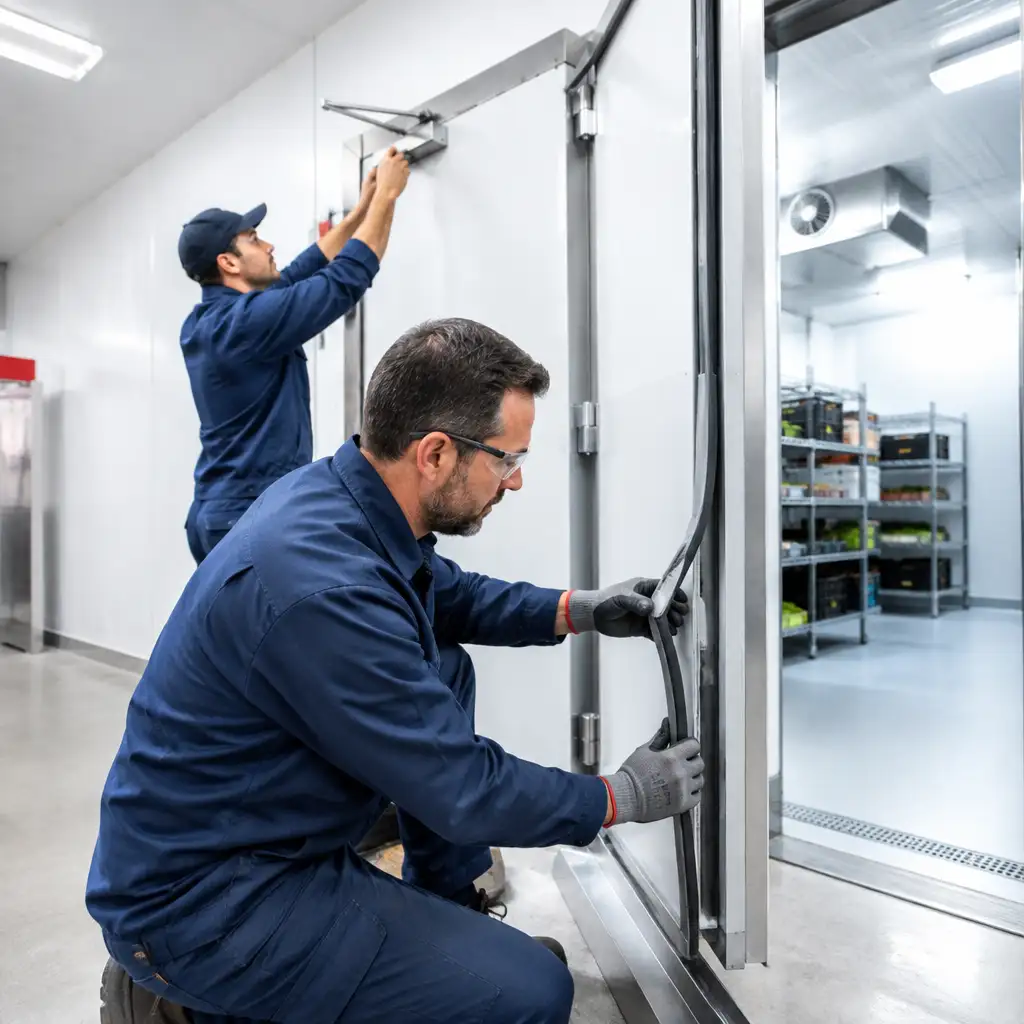
Walk-in cooler doors are a primary air infiltration point for refrigerated spaces. Even small gaps, worn gaskets, or slow-closing hinges allow warm, humid air to enter, increasing refrigeration load and creating condensation and frost. That extra load raises compressor run-time, can force systems to work outside design conditions, and magnifies the risk of product temperature excursions.
Operationally, the symptoms may be subtle: slightly longer pull-down times, higher energy bills, or intermittent frosting around doors. Left unaddressed, these symptoms become recurring refrigeration system stressors that increase maintenance needs and shorten equipment life.
Early recognition and targeted retrofits—focused on gaskets, thresholds, door hardware, and closing automation—can restore airtight performance and reduce both energy and food loss. For parts and replacement components, facility managers can often source items through a local marine and industrial supply store that stocks refrigeration parts and replacement components.
Internal link: marine and industrial supply store
Why It Matters
Energy and food safety are primary drivers for addressing door performance. Increased air infiltration increases refrigeration load roughly proportional to the temperature and humidity differential between the interior and exterior. In warm, humid climates, moisture ingress also accelerates icing and defrost cycles—cutting into system efficiency.
Operational impacts include higher electricity costs, shortened compressor and evaporator life, increased defrost frequency, and a higher probability of product temperature excursions that lead to spoilage or regulatory non-compliance. For supermarkets and cold storage facilities, even a small percentage reduction in product loss translates to significant annual cost savings.
From a maintenance perspective, recurring door-related issues often divert technicians from planned preventive tasks to emergency service calls. A coordinated retrofit program reduces reactive repairs and allows maintenance teams to concentrate on system-level preventive maintenance.
Common Causes or Industry Considerations
Several common causes underlie failing door performance. Understanding these helps you diagnose problems and choose targeted interventions rather than wholesale replacements.
- Worn or compressed gaskets: Over time, gaskets lose elasticity, harden, or tear, creating leakage paths.
- Damaged thresholds: Thresholds that are corroded, deformed, or lack thermal breaks can create gaps and thermal bridges.
- Slow or missing door closers: Manual doors without effective closing hardware remain open longer during loading and restocking operations.
- Misaligned doors or warped frames: Structural movement and repeated impact create inconsistent sealing across the door perimeter.
- Poor user practices: Open-door habits, overcrowded threshold areas, or misuse of locking hardware increase wear and failure rates.
Environmental considerations matter: coastal and marine environments accelerate corrosion; heavy-traffic retail aisles increase impacts. For facilities with integrated HVAC/R controls, door-induced load swings can complicate temperature control strategies and may require coordination with refrigeration and building management systems.
Engineering or Operational Solutions
Retrofits should be engineered solutions that address root causes and fit operational constraints. Here are pragmatic options with engineering rationale and expected impacts.
1. Gasket Replacement and Upgrades
Gaskets are the first-line defense against infiltration. Replace hardened or torn gaskets with NSF-rated, flexible elastomer gaskets that match door profiles. Consider magnetic gaskets for metal doors where applicable—these provide uniform sealing pressure and simplify door alignment.
Benefits:
- Restores full-perimeter contact and reduces infiltration.
- Low material cost and fast installation.
- Improves operational temperature stability and reduces defrost cycles.
2. Thermally Broken Thresholds
Thresholds with thermal breaks reduce unwanted heat conduction and provide a better sealing surface. A thermally broken aluminum threshold isolates the interior cold plate from the warmer exterior slab and minimizes condensation at the sill.
Engineering considerations include ensuring threshold alignment with door bottom seals and accounting for floor finishes and ramps. Thermally broken thresholds are particularly valuable where slab temperatures and humidity are high.
3. Automatic Closers and Hold-Open Controls
Automatic closers, coordinated with loading operations, bring doors back to a sealed position reliably. Options range from pneumatic or hydraulic closers to electrically actuated closers integrated with access control or interlock systems. For high-traffic bay doors, electric operators with adjustable closing speed are effective.
Controls integration with HVAC/R or building automation systems can reduce fridge load during doors-open events by temporarily adjusting setpoints or staging compressors, but be cautious: such strategies must maintain food safety temperature margins.
4. Threshold Drip Trays and Drain Routes
Where condensate is a problem, adding drainage channels or drip pans prevents pooling at door sills, preserving gasket life and preventing microbial growth. Correct slope and unobstructed drain paths are essential.
5. Door Hardware and Alignment Repairs
Shim plates, reinforced hinges, and adjustable strike plates restore proper alignment. For damaged frames, retrofit kits are available that allow in-place repairs without removing large door sections — an important operational advantage for busy facilities.
Cost vs. Energy and Food Loss Analysis
Decisions should be data-driven. Below is a simplified comparison of typical retrofit options, estimated cost ranges, and expected operational impact. Site-specific conditions will change these numbers—use them as planning inputs, not guarantees.
| Retrofit | Typical Installed Cost | Estimated Energy Savings | Product Loss Reduction | Typical Payback |
|---|---|---|---|---|
| Gasket replacement | $200–$900 per door | 3–8% (per door area) | Reduces localized temperature excursions | 6–18 months |
| Thermally broken threshold | $800–$2,500 | 2–6% | Reduces condensation-related losses | 1–3 years |
| Automatic closer / operator | $1,200–$4,500 | 5–12% (depends on traffic) | Significant where doors remain open frequently | 1–2 years (high-traffic areas) |
Note: Savings depend on door count, traffic patterns, and local electricity rates. For facilities with dozens of doors, small per-door savings compound rapidly. In addition to energy savings, reducing product temperature excursions often avoids costly spoilage events, which can dwarf energy payback in value.
Best Practices
Implementing retrofits successfully requires a combination of engineering controls and operational disciplines. Follow these best practices to maximize results:
- Perform a door audit: inspect gaskets, thresholds, hardware, and alignment; measure air leakage where possible.
- Prioritise high-traffic and high-risk doors first—loading bays, receiving coolers, and retail walk-ins.
- Standardize components: use common gasket profiles and hardware to simplify spare-part stocking from your supply partner.
- Integrate door retrofits with preventive maintenance schedules to minimize downtime and service calls.
- Train staff on proper door use: keep thresholds clear, avoid propping doors open, and report damage promptly.
For spare parts and replacement components, keeping an inventory of gaskets, hinge kits, and threshold seals at your warehouse or local supplier reduces repair lead times. A local technical parts counter can be a valuable resource for expedited replacements and troubleshooting supplies.
Internal link: equipment sales and specification support are also useful when planning larger-scale upgrades or specifying automated door operators that interface with building controls.
How NEMES Helps
NEMES combines engineering consultation, equipment sales, a stocked marine and industrial supply store, and responsive field service to support door retrofit projects from assessment through long-term operation.
Engineering consultation: Our team evaluates door leakage, thermal performance, and operational patterns and recommends cost-effective retrofit packages appropriate for commercial refrigeration and industrial refrigeration applications.
Equipment selection and sourcing: Through our equipment sales capabilities and manufacturer partnerships, NEMES can source compatible gaskets, thermally broken thresholds, automatic closers, and hardware. We help specify materials that match door construction and meet food-safe finish requirements.
On-site service and preventive maintenance: Our field service technicians perform installations, alignment, and functional testing and can integrate door maintenance into broader preventive maintenance programs to reduce emergency service calls and improve system reliability.
Technical support and troubleshooting: Because door issues often intersect with HVAC/R, electrical systems, and controls, NEMES provides coordinated support across disciplines so that door retrofits deliver measured improvements without unintended impacts on refrigeration cycles or electrical loads.
Internal link: When you need scheduled work or ongoing support, our preventive maintenance and field service capabilities can help keep doors, refrigeration systems, and control interfaces operating reliably.
Conclusion
For facility managers responsible for cold storage, supermarket refrigeration, or food processing environments, walk-in cooler doors are a strategic maintenance and engineering priority. Recognizing early warning signs—worn gaskets, misaligned doors, failing thresholds, and inadequate closing hardware—lets you choose targeted retrofits that reduce energy use, prevent food loss, and lower lifecycle costs.
Engineering options such as gasket upgrades, thermally broken thresholds, and automatic closers deliver measurable benefits when selected and installed correctly. Pairing these retrofits with standardized spare parts, staff training, and a preventive maintenance program produces durable results and reduces emergency service demands.
For planning and execution, an integrated partner that provides engineering guidance, equipment sourcing, parts supply, and field service helps ensure retrofits meet both operational and food-safety requirements.
Internal link: If you’d like to discuss assessment or retrofit options, contact our engineering team to request technical assistance.
Frequently Asked Questions
How can I quickly tell if a walk-in cooler door needs a gasket replacement?
Look for visible cracks, compression set (where the gasket no longer springs back), air drafts, and frost formation around the perimeter. A simple paper or dollar-bill test—closing the door on a sheet and feeling for resistance along the perimeter—gives a quick indication of sealing integrity.
What is the expected lifespan of a typical door gasket in a commercial environment?
Under normal conditions, high-quality gaskets last 3–7 years. Lifespan shortens with heavy traffic, chemical exposure, or frequent impacts. Regular inspections during preventive maintenance help identify replacement timing before significant energy or product losses occur.
Will adding an automatic closer negatively affect throughput during loading operations?
Properly specified closers with adjustable speed and hold-open features can improve throughput by reducing manual handling of heavy doors while ensuring doors are not propped open. For busy docks, coordinate closer settings with operational workflows to balance access and sealing.
How do thermally broken thresholds prevent condensation?
Thermal breaks reduce conductive heat transfer between the exterior slab and the interior floor/door assembly. By minimizing cold bridging, they reduce surface temperatures where humid air could condense and freeze, protecting seals and reducing icing.
Can door retrofits be staged to manage capital costs?
Yes. Prioritise high-traffic and high-risk doors first for the fastest payback. Gasket replacement is a low-cost initial measure; more capital-intensive upgrades like thresholds and automated operators can be scheduled as part of phased capital plans.
How often should doors be included in preventive maintenance routines?
Inspect doors monthly for visible damage and seal integrity; include gasket checks and hinge lubrication in quarterly preventive maintenance. Annual more detailed inspections and replacement planning are recommended for high-use doors.
Disclaimer: Estimated savings and payback figures are illustrative. Actual results depend on site-specific conditions, traffic patterns, and energy costs. Contact NEMES for an on-site assessment to obtain a tailored analysis.
Whether you’re planning a new project, upgrading existing equipment, or solving an operational challenge, NEMES can help you evaluate your options with practical engineering guidance, quality equipment, and responsive technical support. Call (800) 540-8893 or email info@nemesinc.com to discuss your application.