This article explains why brine chiller maintenance matters specifically in seafood plants, outlines common causes of scaling and fouling, and presents practical engineering and operational solutions you can apply today. It also provides actionable maintenance schedules, monitoring sensor recommendations, and spare-parts stocking guidance so maintenance managers and plant engineers can minimize downtime and keep operations running smoothly.
Understanding the Challenge
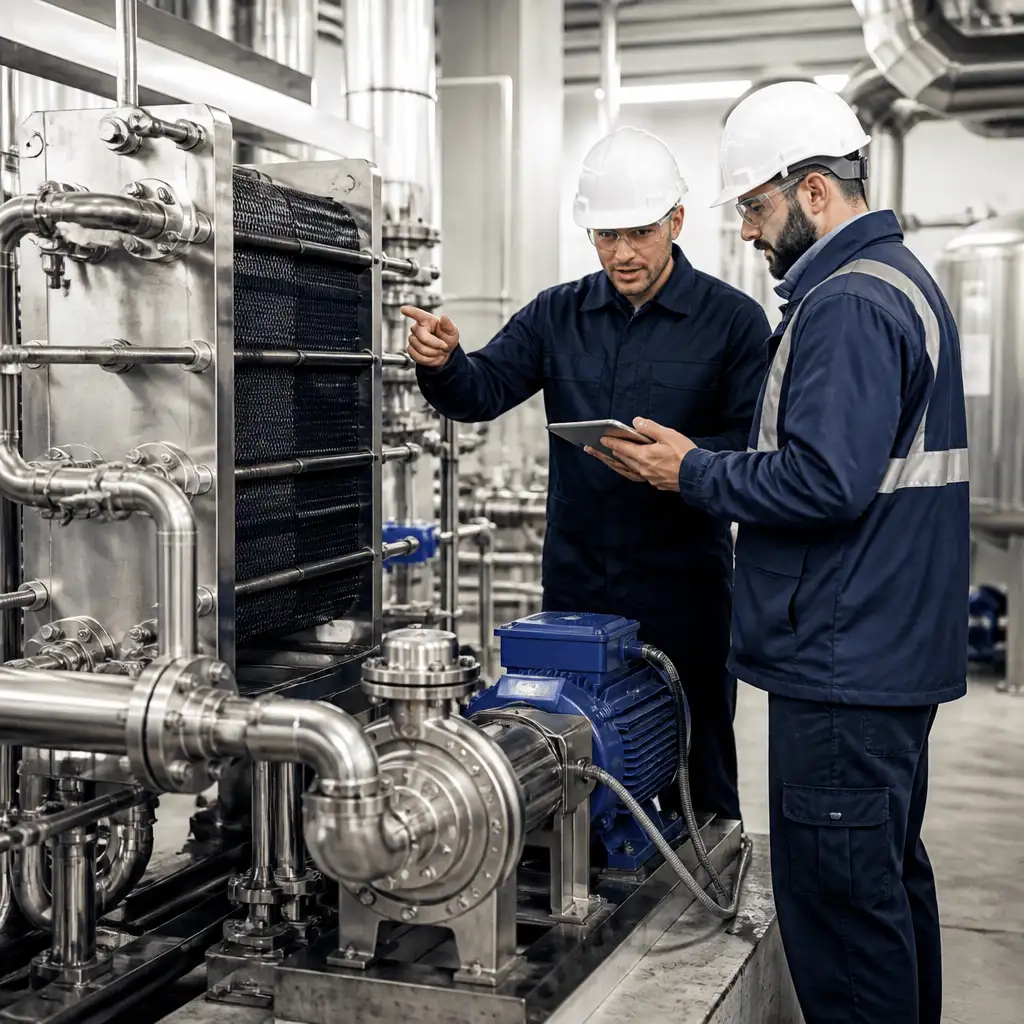
Brine chillers use a saline or glycol-based secondary refrigerant to cool product or equipment. Brine chemistry (salt concentration, additives), flow velocity, temperature profiles, and heat-exchanger design interact to determine whether deposits form on heat-transfer surfaces. Fouling can be mineral scale (from hard water), organic fouling (fish oils, proteins), or biological (biofilm and microbial growth).
In seafood processing, unique contamination sources—seafood particulates, oils, and organic load—raise the fouling risk relative to dry food or general cold storage. Mechanical wear, incompatible materials, and periods of stagnation (weekend shutdowns) worsen the problem. Because small changes in heat transfer area or flow translate into large drops in refrigeration capacity, even modest fouling can reduce throughput appreciably.
Early detection and consistent brine chiller maintenance are therefore essential to prevent production interruptions and to preserve the useful life of chillers, pumps, and heat exchangers.
For plant teams evaluating upgrades or replacements, start with proper system sizing and component selection—NEMES provides engineering consultation and equipment selection guidance to match chiller capacity and heat-exchanger type to process needs.
Why It Matters
Fouled brine chillers cause four immediate operational impacts: reduced throughput, increased energy consumption, accelerated equipment wear, and greater food-safety risk. Reduced heat-transfer leads to longer cooling cycles and constrained line speeds. Plants frequently respond by lowering setpoints, which increases compressor run time and energy expense.
Beyond efficiency losses, fouling increases differential pressure across heat exchangers and pumps, causing higher motor loads and premature bearing or seal failure. For seafood processors managing tight production windows and cold-chain compliance, unplanned downtime translates directly into missed shipments and product loss.
Finally, deposits can harbor bacteria and biofilms. While refrigeration slows microbial growth, insulating scale and organic films may allow localized warming—raising food-safety concerns and regulatory exposure if not controlled.
Common Causes or Industry Considerations
Recognizing root causes helps target effective controls. Common contributors in seafood processing include:
- Hard water and dissolved minerals that precipitate as temperature changes—particularly on cold surfaces where solubility drops.
- Organic contamination from fish oils, blood, and tissue that coagulate and adhere to heat-transfer surfaces.
- Biological fouling from microbial growth in low-flow or stagnant zones.
- Inadequate filtration allowing particulates to accumulate in exchangers and pumps.
- Improper material selection—using metals susceptible to pitting, galvanic corrosion, or surface roughness that encourages deposit adhesion.
- Low fluid velocity or dead legs in piping where solids settle and biofilms form.
- Poor chemical control: incorrect brine concentration, missing corrosion inhibitors, or incompatible chemical cleaners.
Operational considerations include seasonal temperature swings, shutdown protocols, and cleaning-in-place (CIP) capability. For facilities that blend seawater or onsite well water into systems, testing and pre-treatment are essential inputs to any preventive program.
Engineering or Operational Solutions
A layered engineering approach produces the most reliable results: prevent deposits with proper chemistry and materials, remove deposits with targeted cleaning, and detect problems early with monitoring and controls.
Water Treatment and Chemistry
Control brine chemistry to minimize precipitation and corrosion. Typical measures include:
- Use pretreated water: softening or reverse osmosis (RO) can reduce hardness ions that cause scale.
- Add approved corrosion inhibitors and scale dispersants formulated for brine service and food-industry compatibility.
- Maintain correct brine concentration (salinity) and pH to limits recommended by equipment manufacturers.
Material Selection and Component Design
Choose materials and heat-exchanger types that resist fouling and tolerate cleaning. Common choices:
- Plate heat exchangers (PHEs): high turbulence and compact size make them efficient and easier to clean via gasketed or welded designs. For corrosive brines consider stainless steel 316L or duplex alloys; titanium is ideal for seawater/brine with aggressive chemistries.
- Shell-and-tube: robust for large capacity but can be harder to clean; use appropriate tube materials and provide tube-side cleaning access.
- Pumps and piping: specify smooth-bore piping, minimize dead legs, and use materials compatible with inhibitors and cleaning agents.
Simple equipment-comparison table:
| Heat Exchanger | Advantages | Cleaning Considerations |
|---|---|---|
| Plate Heat Exchanger | High turbulence, compact, easy to disassemble | Gasketed PHEs allow mechanical cleaning; welded PHEs require chemical CIP |
| Shell-&-Tube | High capacity, robust | Requires tube-side cleaning tools or chemical cleaning; more dead zones |
| Spiral/Coil | Good for viscous fluids, fewer leak paths | Limited mechanical access; chemical cleaning typically required |
Filtration and Separation
Install multi-stage filtration ahead of chillers to capture organics and particulates:
- Strainers and basket filters for large debris.
- Cartridge or bag filters for fine particulates; specify micron ratings based on process load.
- Cyclonic or centrifugal separators to remove oils and solids before they reach heat exchangers.
Heat-Exchanger Cleaning Regimes
Develop a cleaning schedule combining routine mechanical or chemical cleaning and periodic deep cleaning. Options include:
- Daily visual and operational checks with weekly backflushing where applicable.
- Scheduled CIP (chemical cleaning) for welded PHEs and shell-and-tube exchangers—use approved acids or caustics compatible with materials and food-safety rules.
- Mechanical cleaning and gasket replacement for gasketed PHEs on an as-needed basis driven by pressure-drop and delta-T trends.
Monitoring and Controls
Early detection prevents small problems from becoming production-stopping events. Recommended sensors and control strategies:
- Delta-T monitoring across each heat exchanger—establish baseline delta-T and alarm at 10–15% degradation.
- Flow meters and differential pressure (DP) sensors to detect rising head loss that signals fouling.
- Conductivity and salinity sensors to detect brine concentration drift.
- Corrosion probes or coupon monitoring in aggressive brine loops.
- Integrate sensor outputs into PLC/HMI for trend logging, automated alarms, and data-driven maintenance triggers; consider VFDs on pumps to maintain design velocity and avoid low-flow conditions.
Spare Parts and Redundancy
Stocking the right spare parts shortens emergency repair times and avoids production losses. Recommended spares for brine chiller systems:
- Critical pumps (at least one spare or repair kit), mechanical seal kits, and impellers.
- Replacement filter cartridges and basket strainers sized for your filters (2–4 week supply depending on load).
- Gasket sets for plate exchangers (full set for each PHE) and tube-side cleaning tools for shell-and-tube units.
- Sensors: spare flow, DP, and conductivity probes to avoid extended downtime while sourcing parts.
- O-rings, valves, and control spare modules (VFD bypass contactors or spare starter components).
Best Practices
Adopt an organized preventive maintenance program that blends routine inspections, data-driven thresholds, and documented procedures. Practical schedule examples follow a risk-based cadence tailored to process load and fouling severity.
Suggested Maintenance Schedule
- Daily: Visual checks on pumps, observe unusual vibration or noise; check brine temperature and delta-T for abnormal drops.
- Weekly: Inspect strainers and clean basket filters; verify brine concentration and inhibitor levels; record sensor readings.
- Monthly: Check pump seals and coupling alignment; review trend logs for delta-T and DP; change cartridge filters as required.
- Quarterly: Perform chemical analysis of brine (hardness, pH, chloride); inspect heat-exchanger gaskets and tighten plate packs if applicable; test corrosion coupons.
- Annually (or as-needed based on condition): Full mechanical inspection, deep CIP or mechanical cleaning, pressure test components, and replace aging pumps or controllers.
Set alarm thresholds that trigger immediate corrective actions before capacity loss reaches critical levels—for example, a sustained 10% rise in delta-T or a 15% increase in DP should generate a work order for cleaning or inspection.
Training and Documentation
Document all procedures and provide hands-on training for technicians on safe chemical handling, CIP procedures, and basic diagnostics. Maintain an up-to-date parts list and equipment drawings in the maintenance area to accelerate repairs.
How NEMES Helps
NEMES combines engineering support, equipment sales, and field service to help seafood processors develop and sustain reliable brine chiller systems. Our engineering team provides site evaluations, system design adjustments, and trusted manufacturers recommendations to match heat-exchanger materials and chiller capacity to your brine chemistry and process demands.
For plants building or improving preventive programs, our technicians perform on-site diagnostics, trend-analysis setup, and preventive maintenance planning. We support chemical cleaning programs, supply replacement components from our preventive maintenance work, and deliver field repairs to minimize downtime.
NEMES also supports spare-parts planning and parts sourcing, leveraging long-term manufacturer partnerships to provide replacement pumps, seals, sensors, and plate-exchanger gaskets—helping operations reduce lead times and get systems back online sooner.
Conclusion
Scaling and fouling in brine chillers are predictable, controllable problems when addressed with an engineering-first approach: control water chemistry, choose appropriate materials and heat-exchanger types, install filtration and separators, apply regular cleaning regimes, and use monitoring to catch problems early. For seafood processing plants where downtime equals lost throughput, these steps protect production, reduce energy use, and extend equipment life.
If your facility is experiencing rising delta-T, increasing pump head, or frequent cleanings, a data-driven inspection and preventive program will quickly show the most cost-effective next steps. For help designing a maintenance plan or evaluating equipment upgrades, contact NEMES to schedule an evaluation and receive practical recommendations tailored to your operation.
Frequently Asked Questions
How often should I chemically clean a plate heat exchanger handling seafood brine?
Cleaning frequency depends on load, but a common starting point is quarterly CIP with monthly inspections. Use delta-T and DP trends to move to condition-based cleaning.
What sensors give the best early warning of fouling?
Delta-T across exchangers, differential pressure, and flow meters are the most reliable early indicators. Conductivity sensors help detect brine concentration drift that can precipitate scale.
Are stainless steels sufficient for seawater-based brine?
316L stainless is suitable for many brine applications, but for aggressive seawater conditions or elevated chloride levels, duplex stainless or titanium may be required to avoid pitting and corrosion.
Which spare parts should I prioritize stocking?
Prioritize pump repair kits and a spare pump, mechanical seals, filter cartridges, and plate-exchanger gaskets. Keep spare sensors for flow and DP to avoid extended outages while parts arrive.
Can filtration remove biofouling risk entirely?
Filtration reduces particulate and organic load but does not eliminate microbiological growth. Combine filtration with proper inhibitor programs, regular cleaning, and avoiding stagnation to control biofouling.
Routine maintenance can extend equipment life and reduce the risk of unexpected failures. If you’re developing a preventive maintenance strategy or evaluating aging equipment, NEMES can help you keep critical systems operating at their best. Call (800) 540-8893 or email info@nemesinc.com to discuss preventive maintenance support.