
Variable frequency drives (VFDs) are central to efficient motor control in cold storage: they modulate motor speed for compressors, evaporator fans, and conveyors, improving energy use and equipment lifespan. Yet cold environments introduce unique failure modes—condensation, thermal cycling, and firmware drift—that often go unaddressed in standard maintenance programs. This article highlights common scheduling and execution mistakes maintenance managers make when planning VFD preventive maintenance and gives a corrective checklist you can adopt immediately to reduce failures and energy issues.
Maintenance managers and refrigeration contractors will find practical diagnostics, environmental control tips, and spare-part strategies tailored for refrigerated warehouses, blast freezers, and food distribution centers. Implementing the right VFD preventive maintenance program lowers disruptions, reduces related soft-starter failures, and improves motor-control energy performance.
Understanding the Challenge
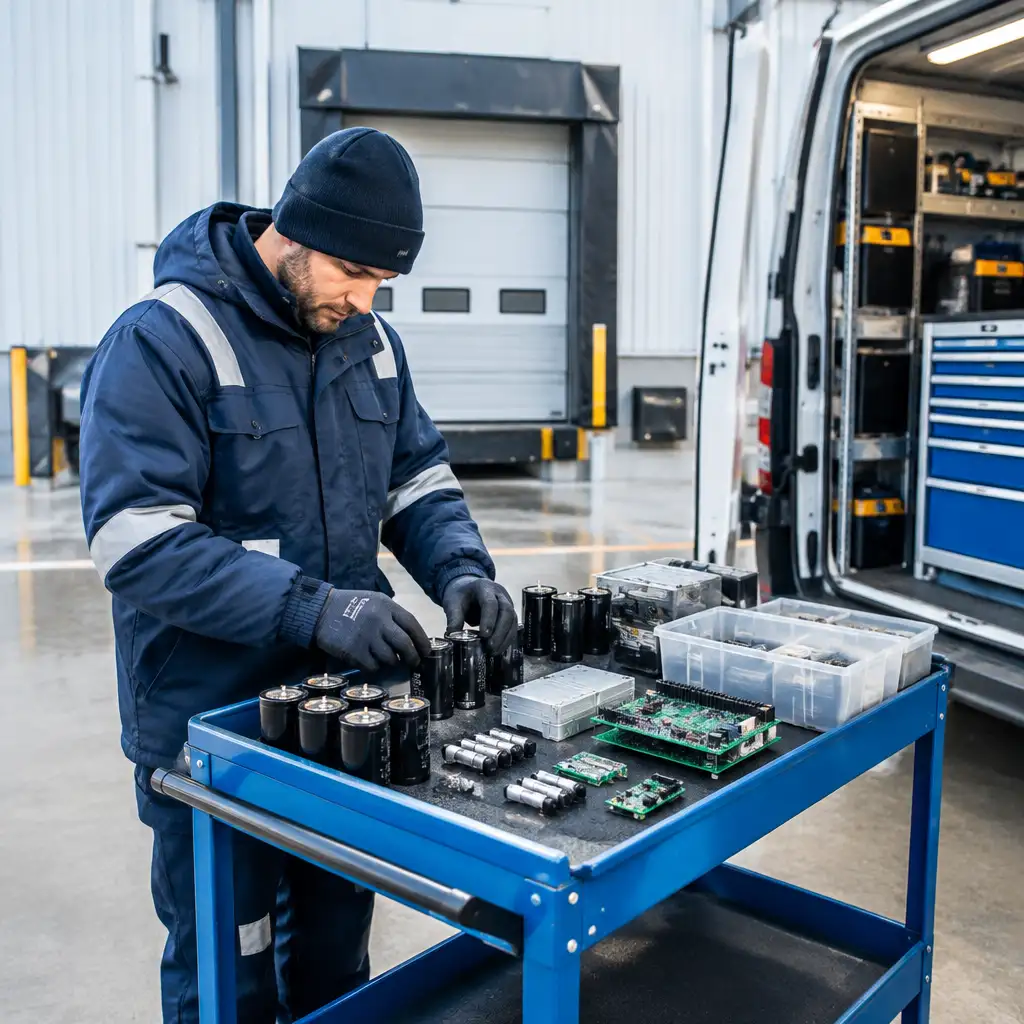
Cold storage presents a paradox for electrical equipment: while low ambient temperatures can help reduce thermal stress on semiconductors, rapid temperature swings and high humidity promote condensation and corrosion inside enclosures. VFDs are especially vulnerable because they contain capacitors, DC bus components, control boards, and connectors sensitive to moisture and mechanical stress.
Common VFD applications in cold storage include refrigeration compressors, evaporator and condenser fans, and conveyor motors. These drives are frequently installed inside cold rooms, adjacent mechanical rooms, or outdoor skids—each environment creating different maintenance priorities. A VFD left unchecked in a cold, damp environment can develop insulation failures, control logic errors, and capacitor degradation that are less common in temperate mechanical rooms.
Because VFDs integrate power electronics and logic controllers, maintenance must address both electrical and software layers. Skipping firmware verification, failing to check cooling and heater circuits, or not planning spares for long-lead electronic components are mistakes that rapidly escalate downtime in critical cold-storage operations.
Why It Matters
Poor VFD preventive maintenance increases the risk of unplanned shutdowns, product loss, and cascade failures. In refrigerated warehouses a single VFD failure can stop compressors or fans, causing temperature excursions that jeopardise perishable inventory and force emergency repairs at premium labor rates.
VFD-related issues also affect related motor-starting equipment. For example, improper VFD behaviour or unstable drive output can overstress soft starters and contactors on adjacent motors. Field experience indicates that a structured VFD preventive maintenance program can reduce downstream soft-starter failures and contactor wear significantly—conservative industry estimates suggest a 30–50% reduction in related starter failures when drives are properly maintained and configured for cold environments.
Beyond reliability, energy performance is directly affected by VFD condition and configuration. Drives with outdated firmware, incorrect motor parameters, or failing DC-link capacitors consume more power and may produce harmonic distortion that increases losses in transformers and motors. Typical energy improvements after targeted VFD PM range from 5–15%, depending on baseline condition and control strategy.
Common Causes or Industry Considerations
Understanding frequent root causes helps prioritise inspections and schedule corrective action. The most common industry considerations include:
- Inadequate thermal management: cold rooms can be too cold for drives designed for ambient mechanical rooms. Low-temperature operation shortens capacitor life and can impair LCD displays and connectors.
- Condensation and corrosion: cycling between warm service work and cold operation leads to moisture ingress inside drive enclosures and on circuit boards.
- Missed firmware and parameter checks: firmware updates, parameter backups, and motor-tuning checks are often omitted from mechanical-focused PM schedules.
- Poor spare-part planning: drives rely on specific capacitors, IGBT modules, and control boards that may have long lead times; lack of critical spares lengthens downtime.
- Improper enclosure selection and heater omission: drives installed in unheated enclosures or without condensation heaters are more likely to develop moisture-related faults.
Other practical considerations include supply-side harmonics, cable routing (long motor cables in cold areas affect dv/dt and reflected wave phenomena), and environmental contaminants such as salt near coastal cold-storage ports that accelerate corrosion. Addressing these requires both electrical expertise and refrigeration-system awareness.
Engineering or Operational Solutions
Effective VFD preventive maintenance in cold storage combines diagnostics, environmental controls, and logistics planning. The following solutions are practical and engineering-led:
Temperature and enclosure strategies
Install drives in properly rated enclosures (NEMA/IEC classifications) and consider internally mounted heater kits or panel heaters controlled by thermostats to prevent condensation during warm-up cycles. For outdoor or poorly insulated rooms, relocate drives to conditioned electrical rooms when feasible, or use heated enclosures with desiccant breathers.
Diagnostics and firmware management
Make firmware and parameter checks part of every PM. Use portable diagnostic tools to capture fault logs, drive hours, and DC bus voltage trends. A good PM program includes backing up parameters, verifying motor nameplate entries, and confirming PID or V/f settings are appropriate for low-temperature compressor or fan loads.
Electrical and harmonics mitigation
Mitigate harmonics with properly sized filters or line reactors when drives are added to existing electrical systems. Verify cable screening and grounding to reduce EMI that can upset control logic. Confirm soft-starter settings and interaction with VFDs when both devices are present on a system to prevent miscoordination.
Spare-part strategy
Maintain a critical-spares list focused on the items that fail most often in drives operating in cold storage: electrolytic capacitors, DC bus capacitors, control power supplies, fuses, connectors, and motor-feedback devices (encoders/thermistors). Stocking these locally or with a trusted supplier reduces mean time to repair. Where long lead times exist for specific control boards or IGBT modules, develop an exchange program or keep a small inventory for high-criticality applications.
Test and acceptance procedures
Incorporate functional tests that simulate cold-start behaviour: verify heater operation, warm-up time, soft-start sequences, and safe restart logic after a power interruption. Confirm protective functions—overcurrent, ground-fault, and thermal overload—operate correctly under cold conditions.
Best Practices
Below is a pragmatic checklist and scheduling guidance to correct common PM mistakes and standardise VFD care across facilities.
Corrective VFD Preventive Maintenance Checklist
- Visual inspection: enclosure seals, gaskets, corrosion, and condensation evidence.
- Clean airways and cooling fans; replace filters or change to higher-IP cooling methods where needed.
- Verify and record DC bus voltage, IGBT temperatures, and cooling-fan RPM where available.
- Check electrolytic capacitors for bulging, leakage, and ESR where test equipment is available; replace on evidence of degradation or per manufacturer life-cycle guidance.
- Backup drive parameters and firmware; compare to stored baselines and apply vetted updates during scheduled windows.
- Confirm motor parameters, encoder feedback, and torque/speed limits; perform a test run at typical cold-load conditions.
- Test enclosure heater/thermostat operation and condensation-prevention devices.
- Inspect and tighten power and control terminations after cool-down; thermal contraction can loosen connections over many cycles.
- Verify interaction with soft starters and other motor control devices; adjust coordination settings to avoid overlap and nuisance trips.
- Review spare-part inventory and reorder critical components with long lead times.
Schedule frequency guidance:
- Quarterly: visual inspection, parameter backup, log review for high-use compressors and critical fans.
- Semi-annually: cleaning, filter replacement, firmware check, motor parameter verification.
- Annually: capacitor testing/replacement planning, full electrical verification, harmonic analysis if adding loads.
Use a condition-based element: if drives show elevated DC bus ripple or frequent fault codes, move them to monthly monitoring until stable.
How NEMES Helps
NEMES brings engineering-led preventive maintenance and field service experience to cold-storage VFD programs. Our multidisciplinary approach blends refrigeration system knowledge with electrical controls expertise to diagnose interaction problems between Variable Frequency Drives, soft starters, and the refrigeration plant.
We offer tailored preventive maintenance plans that include on-site diagnostics, firmware and parameter management, and environmental recommendations for drive enclosures and heater kits. When spare parts are needed, our marine and industrial supply store stocks common replacement components and helps source long-lead items. For comprehensive technical work, our preventive maintenance and field service teams provide troubleshooting services, emergency repairs, and on-site testing.
For projects that require equipment selection or retrofits, NEMES offers equipment sales and engineering consultation to recommend drives and enclosure solutions matched to your cold-storage environment. If you need to discuss a specific drive interaction, spare-part list, or firmware strategy, contact NEMES to arrange an on-site evaluation or remote parameter review.
Conclusion
VFD preventive maintenance in cold storage cannot be an afterthought or a copy of mechanical PM routines. Maintenance managers must address thermal management, condensation control, firmware and parameter verification, and spare-part logistics to prevent avoidable failures and energy waste. Implementing the corrective checklist above and adopting condition-based monitoring will reduce soft-starter failures, lower energy consumption, and shorten repair times when problems occur.
Start by auditing your current PM schedule against the checklist, prioritise drives with frequent faults or those serving critical loads, and ensure spares and enclosure heaters are in place. These steps help keep compressors, fans, and conveyors operating reliably so refrigerated product integrity and operational continuity are maintained.
If you need assistance building or auditing a VFD preventive maintenance program tailored to industrial refrigeration, cold storage, or marine refrigeration systems, contact NEMES for practical engineering support and field-service options.
Frequently Asked Questions
Q: How often should drives in blast-freezer rooms be inspected?
A: For extreme cold rooms with frequent thermal cycling, perform visual and parameter checks quarterly, with monthly log reviews for drives that show elevated fault counts or have critical loads.
Q: Will updating drive firmware improve energy efficiency?
A: Firmware updates can include improved control algorithms and better diagnostic reporting, which may improve efficiency and reliability. Always test updates in a controlled window and back up parameters before applying changes.
Q: What spare parts are most critical for reducing downtime?
A: Electrolytic/DC bus capacitors, control power supplies, fuses, and common connector assemblies are high-impact spares. Maintain a parts list based on drive make/model and lead times from suppliers.
Q: Can a VFD cause soft-starter failures?
A: Yes—misconfigured drives or unstable drive outputs can create electrical stresses and control conflicts that increase wear on soft starters. Proper coordination and testing reduce this risk.
Q: Are heated enclosures necessary for all cold-storage VFDs?
A: Not always, but heated enclosures or thermostatically controlled heaters are recommended when drives are exposed to condensation risk or operation below manufacturer-specified minimum ambient temperatures.
Q: How quickly can NEMES support a cold-storage VFD failure?
A: NEMES provides field service and troubleshooting for marine, commercial, and industrial systems. Response time depends on scheduling and location—contact us to discuss available service options.
Routine maintenance can extend equipment life and reduce the risk of unexpected failures. If you’re developing a preventive maintenance strategy or evaluating aging equipment, NEMES can help you keep critical systems operating at their best. Call (800) 540-8893 or email info@nemesinc.com to discuss preventive maintenance support.