Variable Frequency Drives (VFDs) are critical components for motor control across marine, commercial refrigeration, and industrial installations. In cold-storage warehouses, blast freezers, and exposed marine decks, environmental hazards—condensation, salt-laden air, and airborne particulates—drive many VFD failures. Selecting the correct VFD enclosure and cooling approach reduces unplanned downtime, lowers lifecycle cost, and improves system safety and reliability.
This article helps procurement managers, electrical contractors, and maintenance teams evaluate enclosure types, conformal coatings, purge/pressurization systems, and active cooling options so you can align selection decisions with operational goals and maintenance capabilities.
Understanding the Challenge
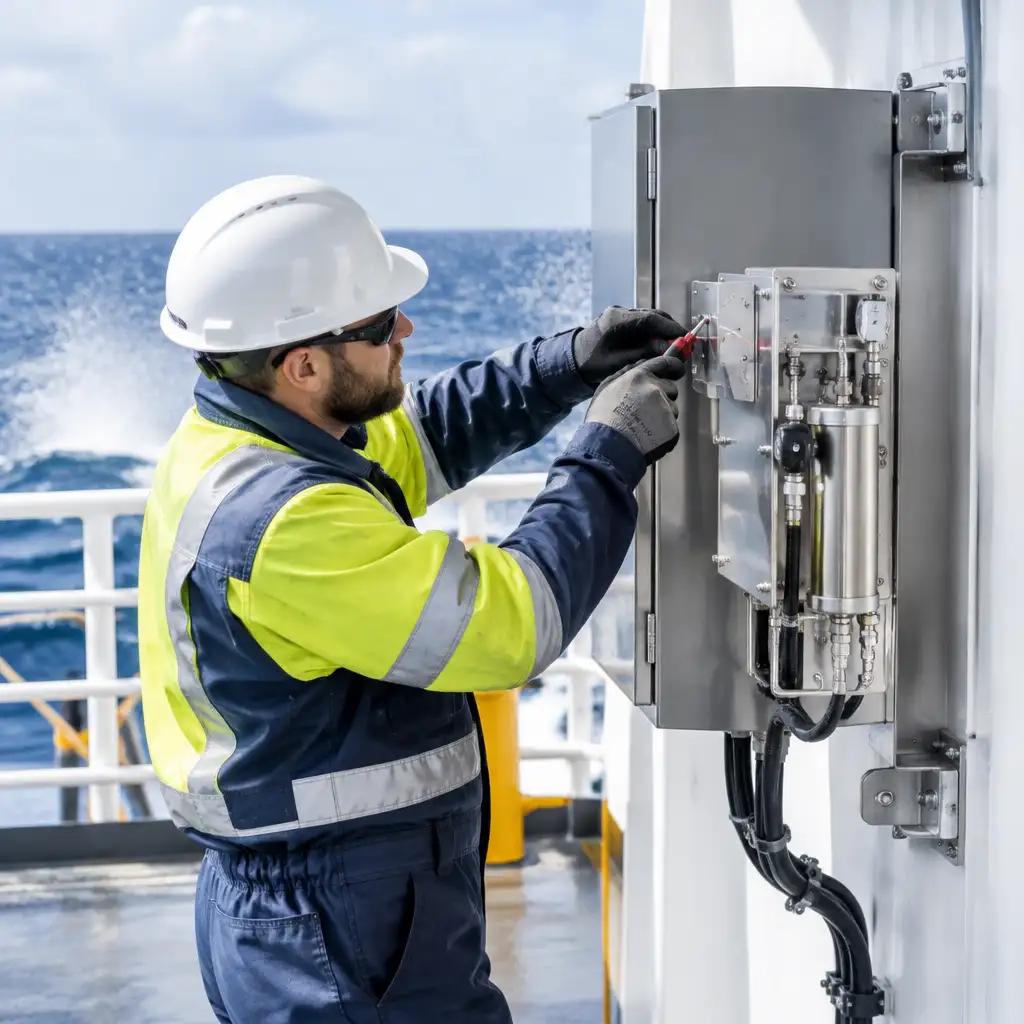
Cold-storage and marine environments present a combination of stressors not common to typical indoor electrical rooms. Cold surfaces, rapid temperature swings, high humidity, salt spray, and dust can act simultaneously. Condensation forms when warm, humid air contacts cold VFD enclosures or components, creating conductive paths that cause short circuits, corrosion, and control logic faults.
Salt air accelerates corrosion on terminals, connectors, and PCBs. Dust, lint, and process aerosols accumulate on heatsinks and fans, reducing cooling effectiveness and leading to thermal stress. Together, these factors increase failure rates and require more frequent maintenance unless mitigated correctly.
Early integration of enclosure and cooling strategy into equipment selection is essential. Engage engineering and equipment selection early—rather than retrofitting after failures occur—to reduce total cost of ownership and extend VFD service life. NEMES’ equipment sales and engineering consultation teams often see projects where enclosure choice was the dominant factor in long-term reliability.
Why It Matters
VFD downtime affects process control, refrigeration performance, and vessel operations. In cold storage or refrigeration, a failed VFD can stop evaporator or condenser fans, compressors, or pump motors—directly threatening stored product and production continuity. On ships and offshore platforms, failures can compromise propulsion auxiliaries, hydraulic pumps, or ventilation systems with safety implications.
Beyond immediate operational impact, recurring failures drive spare-parts inventory growth, emergency field service costs, and lost production or voyage delays. A carefully selected enclosure and cooling arrangement reduces emergency repairs, extends preventive maintenance intervals, and lowers lifecycle costs.
For procurement managers, the right specification balances initial equipment cost against reduced replacement frequency, fewer service calls, and longer MTBF (mean time between failures). These benefits become particularly evident in extreme environments such as refrigerated warehouses and exposed shipboard locations.
Common Causes or Industry Considerations
Understanding root causes helps target mitigation measures. Common contributors to VFD failure in cold-storage and marine settings include:
- Condensation during warm-up cycles or door openings in coolers/freezers.
- Corrosion from salt spray on ships or coastal facilities attacking terminals and PCBs.
- Particulate ingress (dust, lint, process aerosols) clogging fans and fouling heat sinks.
- Thermal stress from insufficient cooling, causing tripped thermal protections and accelerated component aging.
- Incorrect enclosure material or rating for the ambient conditions (e.g., non-stainless in salt air).
Environmental classification and operational profile should drive enclosure specification. Determine exposure level (interior refrigeration room vs. exterior ship deck), temperature extremes, humidity cycles, and access frequency. For marine applications, electrical code and shipboard standards influence grounding and bonding requirements as well as enclosure selection.
| Risk | Typical Cause | Impact |
|---|---|---|
| Condensation | Warm humid air contacting cold surfaces | Shorts, corrosion, relay/IO faults |
| Salt corrosion | Salt-laden air and spray | Terminal and PCB corrosion, connector failure |
| Particulates | Process dust, lint | Clogged fans, reduced cooling, overheating |
Engineering or Operational Solutions
Mitigation strategies fall into several categories: protective enclosures, environmental controls (purge/pressurization), conformal coatings, and active cooling or heat rejection systems. Select combinations as appropriate for the exposure and maintenance capability of the site.
Key options and how they address specific risks:
- Enclosure selection: Choose NEMA/IP-rated enclosures appropriate to the environment. For cold internal rooms, Type 12 may be sufficient; for salt-exposed exteriors, stainless steel Type 4X or IP66-rated housings are preferred. Size enclosures to allow airflow and space for heat exchangers or fans.
- Conformal coatings: Applied to PCBs to reduce corrosion from humidity and salt. Coatings protect components while still allowing heat dissipation; they are most effective when combined with good enclosure practices and cleaning schedules.
- Purge and pressurization systems: Maintain a positive internal pressure with dry, filtered air to prevent ingress of salt, dust, or humid air. Purged enclosures are common on external shipboard installations and in washdown environments.
- Active cooling: Options include filtered fan cooling, HVAC-style conditioned air systems, air-to-air or liquid-to-air heat exchangers, and glycol-cooled heat exchangers for freezer applications. Active cooling prevents overheating and reduces internal humidity when conditioned air is dry.
- Local ventilation and heaters: Small anti-condensation heaters and thermostats can keep internal temperature above dew point during warmups, reducing condensation risk in intermittent-use panels.
Below is a concise comparison to guide early-stage decision-making.
| Strategy | Best Use | Pros | Cons |
|---|---|---|---|
| Stainless steel Type 4X / IP66 | Exterior marine, splash zones | Highly corrosion resistant, durable | Higher cost, heavier |
| Purge/pressurization | Salt spray, washdown, heavy dust | Excellent ingress protection, extends life | Requires filtered air source and maintenance |
| Conformal coating | PCB protection where full enclosure not possible | Cost effective, reduces corrosion | Requires rework for repairs, not standalone solution |
| Active cooling (heat exchangers) | High ambient or thermal loads | Maintains temperature and reduces humidity | Added complexity and maintenance |
Best Practices
Implementing best practices during procurement, installation, and maintenance reduces risk and total cost. Key recommendations include:
- Specify enclosure rating to match the worst credible exposure, not the typical ambient. Consider stainless for coastal/marine locations and IP66/NEMA 4X for exterior-mounted drives.
- Combine strategies: use conformal-coated electronics inside a pressurized stainless enclosure with filtered intake and an anti-condensation heater for extreme cycles.
- Plan for maintainability: locate purge units, filters, and fans for easy access. Document service intervals for filter changes, desiccant replacement, and visual inspections.
- Size cooling solutions for worst-case thermal load plus margin. Undersized cooling is a common cause of thermal trips and accelerated component wear.
- Use corrosion-resistant wiring, terminal blocks, and cable glands. When possible, route critical control wiring internally or through sealed conduits to reduce exposure.
- Establish preventive maintenance programs that include visual inspections, thermal imaging, cleaning of heatsinks and fans, and verification of purge/pressurization function.
For commercial refrigeration and cold-storage, pay special attention to temperature cycles caused by door openings and defrost cycles: these transient events are when condensation and moisture intrusion most commonly occur.
How NEMES Helps
NEMES integrates engineering, equipment sales, supply, and field service to help teams select and implement robust VFD enclosure and cooling strategies. Our engineering consultation covers: environmental assessment, specification development, and vendor selection to match drive manufacturers’ thermal and ingress protection requirements.
Through our equipment sales division, we source enclosure systems, heat exchangers, purge panels, and drives from trusted manufacturers and help specify compliant materials for marine and refrigerated applications. If you need replacement parts or specialized components, our marine supply store maintains stocked items and hard-to-find parts appropriate for harsh environments.
Installation and long-term reliability are supported by our field service team. We perform preventive maintenance, purge system commissioning, conformal coating application oversight, and emergency repairs. We also assist with retrofit strategies where equipment was not originally specified for the environment, developing cost-effective upgrades that reduce repeat failures.
When projects require manufacturer coordination, NEMES leverages long-standing relationships with premium manufacturers to verify component compatibility, warranty implications, and serviceability—helping procurement and electrical contractors make decisions that minimize lifecycle cost and operational risk.
Conclusion
Specifying the right VFD enclosure and cooling strategy is not a one-size-fits-all decision. Cold-storage and marine environments present unique combinations of condensation, salt air, and particulates that must be addressed through enclosure selection, coatings, purge/pressurization, and cooling. Combining multiple mitigations, sizing systems for worst-case conditions, and adopting a documented preventive maintenance plan delivers the best long-term reliability and lowest total cost of ownership.
Early involvement of engineering and a supplier with integrated capability—equipment selection, parts sourcing, and field service—reduces surprises during installation and operation. For projects tied to industrial refrigeration, marine refrigeration, or electrical systems where VFD reliability is critical, plan specifications that reflect the actual exposure and operational profile rather than minimum code requirements.
If you want assistance defining specifications, sourcing appropriate enclosures and purge systems, or planning preventive maintenance for drives in harsh environments, contact NEMES to discuss practical engineering options and long-term support.
Frequently Asked Questions
1. Do I always need a stainless steel enclosure for marine locations?
Not always. Stainless steel Type 4X or IP66 is recommended for exposed exterior locations or continuous salt spray. For interior compartments with little direct exposure, coated carbon steel or properly sealed enclosures may be acceptable if combined with other protections like purge systems.
2. Can conformal coating replace a sealed enclosure?
No. Conformal coating protects PCB surfaces from corrosion but does not prevent particulate ingress or provide mechanical protection. It is best used as part of a layered strategy with an appropriate enclosure.
3. How often should purge filters or desiccant be serviced?
Service intervals depend on environment and system design but typically every 6–12 months for moderate conditions. High-salt or high-dust environments may require more frequent checks. Establish a documented preventive maintenance schedule.
4. Are anti-condensation heaters effective in freezers?
They can be effective when sized and controlled correctly to keep internal temperatures above the dew point during warm cycles. In very low temperatures, heaters alone may be insufficient and should be combined with enclosure insulation or purge systems.
5. Should cooling be air- or liquid-based for high-power drives?
Air cooling with filtered fans or air-to-air heat exchangers is common for moderate power. For high-power VFDs or where ambient temperatures are extreme, liquid-to-air or glycol-cooled heat exchangers provide more effective heat rejection but add system complexity.
6. What is the first step for a retrofit to improve VFD reliability?
Conduct an environmental and failure-mode assessment to identify primary stressors (condensation, salt, dust, thermal load). From there, evaluate enclosure upgrade, purge/pressurization, and targeted active cooling. NEMES can assist with the assessment and retrofit plan.
Selecting the right equipment is critical to long-term performance and reliability. If you’re evaluating new systems or replacing aging components, NEMES can help you identify solutions that fit your operational requirements. Call (800) 540-8893 or email info@nemesinc.com to speak with our experienced team.