Selecting a marine-grade electric motor for workboats is more than matching frame size and horsepower. Procurement managers and vessel owners must weigh environmental protection, cooling strategy, shaft sealing, insulation, certification, repairability, and total lifecycle cost to ensure reliable operation at sea. This guide explains the technical trade-offs that influence upfront cost, downtime risk, maintenance burden, and long-term value for marine electrical systems.
Understanding the Challenge
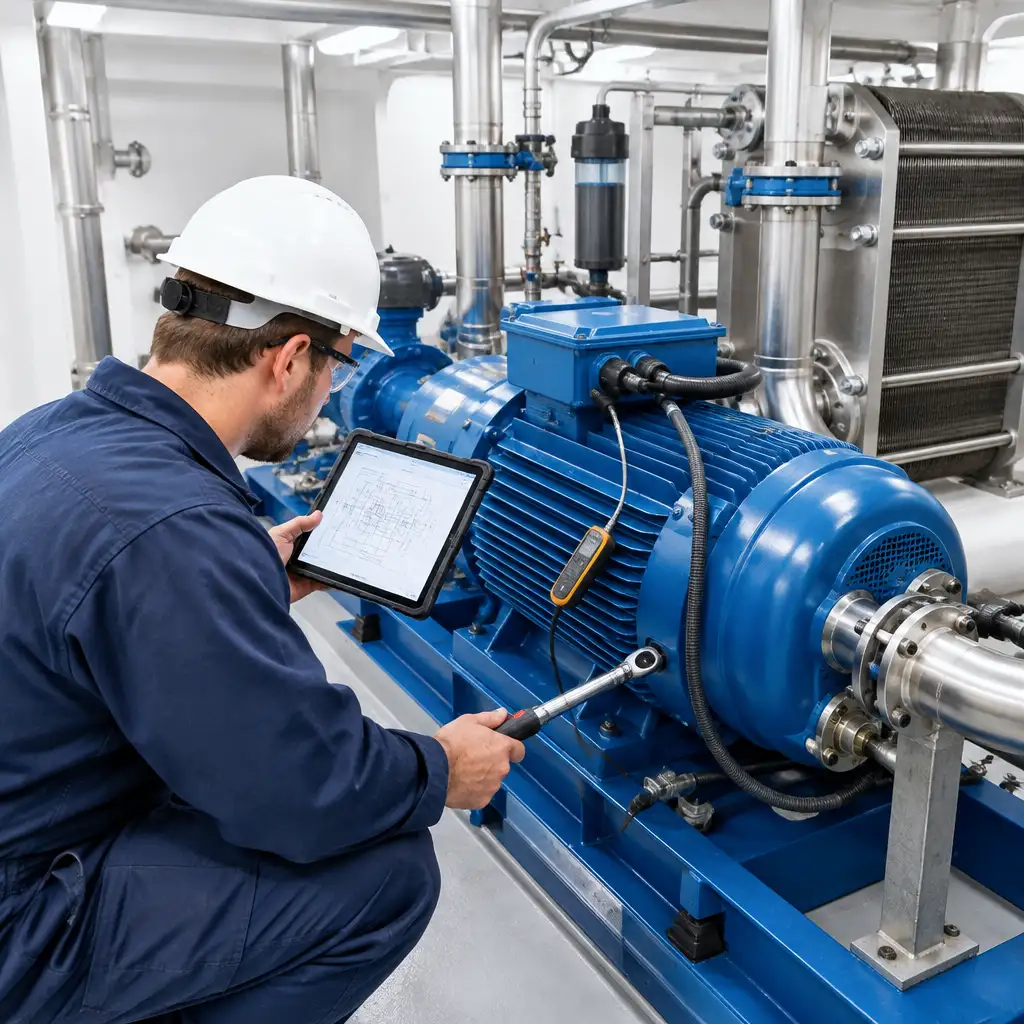
Workboat motors operate in harsh conditions: salt spray, variable loads, confined engine rooms, and intermittent duty cycles. A motor that performs well ashore can fail prematurely on a vessel unless it’s specified for the marine environment. Key choices—IP rating, insulation class, cooling method, shaft sealing, explosion-proofing, and serviceability—affect corrosion resistance, thermal life, electrical performance, and maintainability.
Procurement managers must balance purchase price against availability of replacement parts, vendor support, and expected downtime costs. Sourcing from manufacturers with marine-focused designs and accessible service networks reduces risk. Early engagement with engineering resources helps align motor specification to vessel systems, VFD compatibility, and mounting constraints.
For help identifying suitable options and manufacturer partners, consider NEMES’ engineering consultation and equipment sales support when evaluating motor selection and installation requirements.
Why It Matters
Motor failure on a workboat can interrupt operations, create safety hazards, and drive expensive emergency repairs. The wrong motor type can lead to accelerated bearing wear, insulation breakdown from overheating, or corrosion-related failures. Each failure mode carries direct repair costs and indirect costs such as lost fishing days, towage, or missed deliveries.
Lifecycle cost—total cost of ownership (TCO)—often outweighs the initial purchase price. Higher-spec marine-grade motors cost more up front but can reduce downtime, extend mean time between failures (MTBF), and lower total maintenance expense. Procurement decisions that consider TCO, spare-part logistics, and manufacturer support deliver better operational outcomes than decisions driven only by lowest bid.
Common Causes or Industry Considerations
Understanding common failure drivers helps focus specification priorities. Typical issues on workboats include:
- Corrosion from saltwater and humidity attacking windings, bearings, and terminal boxes.
- Overheating due to inadequate cooling at low vessel speeds or confined mounting.
- Shaft-seal failures leading to water ingress and bearing contamination.
- Electrical issues from transient voltage, harmonics when using VFDs, and poor grounding.
- Delayed repairs due to unavailable spare parts or limited service options at port.
Regulatory and classification requirements (ABS, DNV, Lloyd’s, or equivalent) and hazardous-area classifications (for deck machinery near fuel or cargo) also affect whether explosion-proof or flameproof motors are necessary. Procurement should verify certifications and the manufacturer’s experience with marine applications.
Engineering or Operational Solutions
Several engineering options help mitigate risk and reduce lifecycle cost. Each choice impacts reliability, maintainability, and initial investment:
IP Rating and Corrosion Protection
Pick an IP rating appropriate for the installation. For exposed deck or wet-engine-room installations, IP56–IP66 enclosures prevent water ingress. Combine IP rating with marine-grade painting, stainless mounting hardware, and optionally epoxy-coated windings or varnish treatments to resist salt corrosion.
Insulation Class and Thermal Life
Higher insulation classes (Class F or H) tolerate higher temperatures and extend winding life under thermal stress. In confined or high-ambient engine rooms, specifying a higher insulation class reduces the risk of premature insulation breakdown, particularly when motors are subject to frequent starts or VFD operation.
Cooling Methods: Air vs Water
Cooling choice depends on space, duty cycle, and ambient conditions. Common marine motor cooling types include:
| Cooling Method | Description | Pros | Cons |
|---|---|---|---|
| TEFC (Totally Enclosed Fan Cooled) | Sealed enclosure with external fan | Good protection vs contaminants, widely available | Depends on ambient air; fan can fail |
| IC (Internal Cooling) / IC411 | Air circulated internally, isolated from external air | Better for dusty/wet environments | Less effective in high ambient heat |
| Water-Cooled | Heat exchanger with sea or service-water circuit | Stable temps, compact, ideal for high-power continuous duty | More complex piping, risk of leaks and corrosion |
| Totally Sealed Water-to-Air | Closed water jacket around stator rotor | High reliability in confined spaces | Higher cost, requires heat exchanger and monitoring |
For continuous high-power applications or tight engine rooms, water-cooled motors often extend life despite greater system complexity. For intermittent duty and simpler maintenance, TEFC designs with robust filtration are suitable.
Shaft Sealing and Bearing Protection
Shaft seals protect bearings from seawater and particulate ingress. Options include labyrinth seals, lip seals, and mechanical seals. Mechanical seals provide superior protection but require a plan for maintenance and spare seals. Consider shaft-driven pumps and thrusters where shaft seal failure has operational impact—specify double seals or external flush systems as needed.
Explosion-Proof and Hazardous-Area Options
When motors are located in classified hazardous zones, specify motors certified to the appropriate standard (e.g., IECEx, ATEX, or marine class rules). Explosion-proof motors are heavier and costlier but mandatory where flammable vapours are present. Confirm classification maps and work with engineering to determine whether local ventilation or intrinsically safe alternatives are feasible.
VFD Compatibility and Harmonics
Many vessel systems use variable frequency drives for speed control and energy efficiency. Ensure motor insulation and bearing protection are rated for VFD-induced stresses (dv/dt, common-mode voltage). Consider insulated bearings or shaft grounding rings to reduce bearing currents and premature bearing failures.
Repairability and Spare Parts Strategy
Specify motors with accessible replacement parts and modular components. Standard frame sizes, widely supported brands, and local stocking of spare bearings, seals, and terminal kits shorten repair time. Evaluate manufacturer lead times and whether the vendor or your marine supply store can rapidly source critical spares.
Best Practices
Adopt procurement and maintenance practices that reduce lifecycle cost and downtime risk:
- Define duty cycle, ambient conditions, and mounting environment in the specification document.
- Prioritise IP and insulation classes appropriate to exposure and thermal conditions.
- Specify VFD-capable motors if variable speed is planned and include shaft grounding measures.
- Choose cooling method based on space and duty—water-cooled for sustained high load; TEFC for simpler installations.
- Require clear spare parts lists, lead times, and repair manuals from the manufacturer.
- Include inspection and preventive maintenance intervals in procurement contracts to preserve warranties and extend life.
- Partner with suppliers who provide technical support, aftermarket parts, and on-site field service to minimise downtime.
For stocking and rapid replacement components, the marine supply store can be a practical resource for in-stock industrial supplies and replacement parts tailored to marine motors.
How NEMES Helps
NEMES combines engineering consultation, equipment sales, a stocked marine and industrial supply store, and field service to support motor selection, installation, and lifecycle management. Our team can help translate vessel duty cycles and environmental conditions into a detailed motor specification that balances upfront cost and lifecycle risk.
Services include vendor evaluation, specification writing, and coordination with manufacturer partners to confirm certification, spare parts availability, and repair procedures. We work with trusted manufacturers to source marine-grade motors and advise on VFD compatibility, shaft sealing options, and appropriate cooling methods.
When motors are in service, NEMES provides field service and preventive maintenance to catch seal or bearing wear early, perform insulation testing, and advise on refurbishment versus replacement. That support reduces unplanned downtime and helps manage total lifecycle cost.
Conclusion
Choosing the right marine-grade electric motor requires specifying protection, cooling, insulation, sealing, and serviceability in the context of the vessel’s operations. Procurement managers should evaluate TCO rather than selecting solely on purchase price: higher-spec motors and strong manufacturer relationships can reduce downtime and long-term expense.
Working with engineering-focused partners who combine equipment sales, spare parts sourcing, and field service helps ensure installations are correctly specified, readily supported, and maintainable over time. Early collaboration between procurement, marine engineering, and trusted suppliers reduces surprises and improves operational resilience.
For equipment recommendations, marine supply options, and technical support, contact NEMES to discuss how we can help align motor selection with your vessel’s operational needs.
Frequently Asked Questions
What IP rating should I specify for deck-mounted motors on workboats?
For exposed or frequently wet locations, IP56 to IP66 is recommended. Combine an appropriate IP rating with corrosion-resistant finishes and stainless hardware for long-term protection.
When is water-cooled preferable to air-cooled motors?
Water-cooled motors are preferable for continuous high-power applications or in cramped engine rooms where ambient air cannot remove sufficient heat. They require a seawater or service-water heat exchanger and preventive maintenance to manage corrosion and biofouling.
How do I reduce bearing damage when using VFDs?
Use motors rated for inverter duty, specify insulated bearings or grounding rings, and ensure proper cabling and surge suppression to limit bearing currents and dv/dt stresses.
Are explosion-proof motors always required in marine settings?
No—only where classification rules identify hazardous zones with flammable vapours or gases. Confirm the vessel’s hazardous-area classification and consult marine engineers to decide between explosion-proof motors or alternative mitigations.
What spares should a vessel stock to reduce downtime from motor failures?
Stock critical spares such as bearings, mechanical seals, connection kits, brush sets (if applicable), and an emergency replacement motor if mission-critical. Confirm lead times with your supplier and maintain a parts list aligned to installed motor models.
How can I evaluate total lifecycle cost for motor procurement?
Consider purchase price, expected MTBF, spare parts cost and availability, anticipated maintenance hours, fuel or energy implications with VFDs, and potential downtime costs. A supplier that provides technical support and fast service reduces lifecycle risk.
[CTA 2 — Equipment Selection]
Selecting the right equipment is critical to long-term performance and reliability. If you’re evaluating new systems or replacing aging components, NEMES can help you identify solutions that fit your operational requirements. Call (800) 540-8893 or email info@nemesinc.com to speak with our experienced team.