This article provides a step-by-step playbook for maintenance managers and procurement managers to forecast obsolescence, cross-reference substitutes, build critical-spare inventories, and leverage manufacturer relationships and a technical parts counter to shorten outage windows. The goal is practical guidance that reduces emergency service calls and keeps systems—industrial refrigeration, HVAC/R, pumps, and marine electrical systems—running reliably.
Understanding the Challenge
Obsolescence occurs when a component is no longer manufactured, when model updates introduce incompatible revisions, or when industry standards change. For maintenance teams, obsolescence shows up as increasing lead times, higher replacement costs, or incompatibility with modern controls such as Variable Frequency Drives (VFDs) and updated motor frames.
Three dimensions define the challenge: mechanical fit (form), electrical/functional compatibility (function), and performance or safety compliance. An apparent bolt or valve that looks interchangeable can fail in the field if tolerances, materials, or electrical characteristics differ. That means cross-referencing and engineering review are critical before swapping parts in critical systems like refrigeration compressors, industrial pumps, or marine electrical panels.
Early identification is key. Link your bill of materials (BOM) and asset registry to end-of-life (EOL) data so that parts obsolescence management becomes part of procurement and maintenance planning—not just emergency replacement.
Why It Matters
Unmanaged obsolescence drives emergency repairs in several ways. First, when a replacement part is unavailable, technicians must improvise or wait for custom fabrication. Second, extended lead times increase the risk of prolonged downtime for critical systems such as cold storage, plate freezers, or shipboard refrigeration. Third, last-minute substitutions can introduce reliability and safety risks.
For business decision makers, obsolescence impacts three measurable areas: operational uptime, lifecycle cost, and safety/compliance risk. Reducing emergency service calls and reactive spending benefits the bottom line by lowering overtime, expedited freight, and production losses. For marine operators, availability of parts directly affects vessel schedules and regulatory compliance.
Common Causes or Industry Considerations
Maintenance teams frequently encounter the same obsolescence drivers across industries:
- Manufacturer discontinuation or redesign of legacy products.
- Component-level EOL within larger assemblies (e.g., motor bearings or control boards for compressors).
- Obsolete electrical components when control systems are upgraded (e.g., new VFDs with different communication protocols).
- Regulatory or refrigerant changes that render older refrigeration components non-compliant.
- Supply chain disruptions that lengthen lead times for otherwise available parts.
Industry-specific considerations matter. In marine refrigeration and Refrigerated Sea Water (RSW) systems, spare parts exposure to a corrosive environment shortens useful life and complicates stocking decisions. In food processing and cold storage operations (plate freezers, blast freezers), redundancy planning for compressors and pumps is essential to protect product integrity.
Engineering or Operational Solutions
A structured engineering approach reduces both the frequency and impact of obsolescence-driven emergencies. Key solutions include integrating BOM review into asset management, establishing cross-reference libraries, and designing for maintainability when specifying new equipment through engineering consultation and equipment selection.
Start with a formal lifecycle planning workflow:
- Inventory assets and parts at the component level (not just assemblies). Tie each item to manufacturer part numbers, serial numbers, and installation dates.
- Perform a BOM review annually or whenever a system upgrade is planned. Use manufacturer catalogs and datasheets to flag parts with EOL notices or long lead times.
- Score obsolescence risk by criticality (impact on operations), rarity (single-supplier items), and lead time sensitivity. Prioritise remediation for high-risk items.
Cross-referencing substitutes requires both data and engineering judgment. Maintain a vetted cross-reference table that captures fit, form, and function equivalence. For electronic components and control modules, verify pinouts, power requirements, and firmware compatibility. When in doubt, consult manufacturers or engineering services to validate substitutes for items such as VFDs, motor starters, or refrigeration control boards.
Rapid sourcing is often a function of supplier relationships. A well-connected marine and industrial supply store or technical parts counter can access OEM replacement parts, aftermarket equivalents, or remanufactured units through manufacturer partnerships—reducing emergency lead times.
Best Practices
Below is a practical checklist maintenance managers can implement immediately to improve parts obsolescence management and reduce emergency repairs.
- Link BOMs to CMMS: Ensure your asset management or CMMS stores BOMs at the component level and flags items with manufacturer EOL alerts.
- Create critical-spare lists: Identify spares that will prevent a facility-stopping outage. Prioritise compressors, critical pumps, VFDs, control boards, and safety devices.
- Adopt A-B-C stocking: Classify parts by criticality and consumption: A (critical, low usage), B (moderate), C (high usage, low criticality). Set min-max or reorder rules accordingly.
- Use strategic kitting: Group commonly replaced parts into kits for emergency repairs (gaskets, seals, fasteners, sensors) to reduce repair time on-site.
- Rotate spares and monitor shelf life: Establish procedures for rotating lubricants, seals, and batteries to avoid shelf-life failures. Store sensitive parts in controlled environments.
- Document cross-reference procedures: Maintain engineering notes on approved substitutes and conditions where substitutions are not allowed.
- Leverage manufacturer networks: Cultivate relationships with OEMs and premium suppliers to access legacy parts, remanufactured options, or part reengineering services.
- Plan phased upgrades: Where obsolescence risk is high, plan staged retrofits that replace multiple obsolete components with current-generation, maintainable units.
Simple inventory strategies can materially reduce emergency repairs. The table below compares stocking approaches commonly used in industrial plants and marine operations.
| Strategy | Best Use | Pros | Cons |
|---|---|---|---|
| Min-Max Onsite Stock | Critical spares with predictable usage | Fast access, reduces downtime | Capital tied up in inventory |
| Vendor-Managed or Consignment | High-cost, low-frequency items (compressors, motors) | Lower inventory cost, quick supplier replacement | Requires strong supplier relationships |
| Rotating Pool Spares | Fleet operations or multiple sites | Efficient use of resources, reduced capital | Logistics for movement and tracking |
How NEMES Helps
NEMES integrates engineering, equipment sales, a marine & industrial supply store, and responsive field service to help customers manage obsolescence and reduce emergency repairs. Our approach begins with engineering consultation and an equipment evaluation to identify high-risk components and recommend maintainable alternatives through equipment sales and specification support.
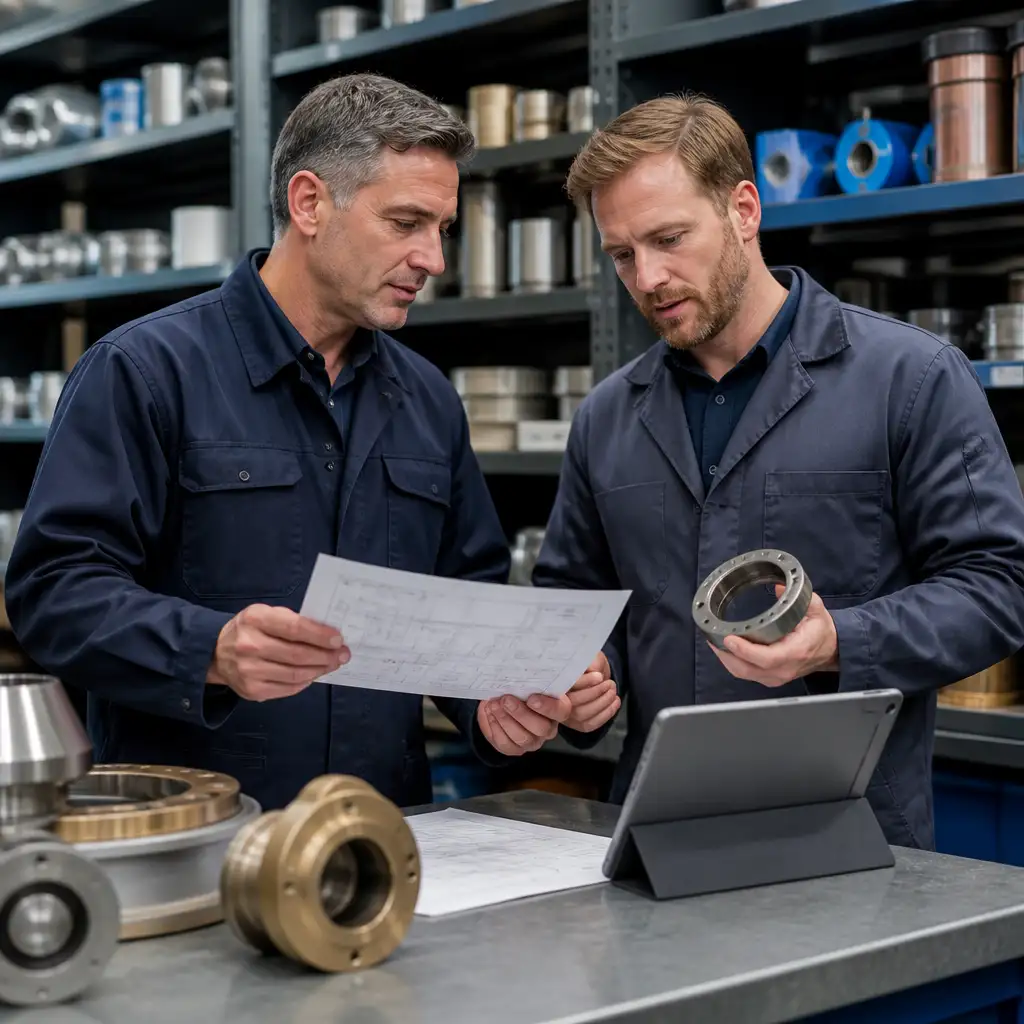
For maintenance teams needing parts quickly, the NEMES marine and industrial supply store functions as a technical parts counter with access to OEM replacement parts, hard-to-find components, and manufacturer-supported substitutes. Our counter staff works with customers to cross-reference parts and build critical-spare kits tailored to specific systems—compressors, pumps, electric motors, VFDs, and control panels.
Preventive maintenance and emergency service are part of the solution. NEMES provides preventive maintenance programs, troubleshooting services, and emergency repairs for marine refrigeration, industrial refrigeration, HVAC/R systems, and electrical systems. Where obsolescence is a concern, we coordinate with represented trusted manufacturers to source legacy parts, remanufactured components, or approved modern equivalents.
We also assist with BOM reviews and critical-spare list development. By combining field service feedback with engineering analysis, NEMES helps customers prioritize stocking, identify candidate parts for consolidation, and create lifecycle plans that reduce unplanned outages without overstocking inventory.
Conclusion
Parts obsolescence management is not a one-time project—it’s an ongoing practice that combines engineering judgment, disciplined inventory management, and strong supplier relationships. Maintenance and procurement managers who tie BOMs to asset management, maintain vetted cross-reference libraries, and implement targeted stocking strategies will see fewer emergency repairs and shorter outage durations.
Start by inventorying critical components, scoring obsolescence risk, and building a critical-spare list. Use strategic partnerships—engineering consultation, a knowledgeable technical parts counter, and manufacturer relationships—to secure fast, reliable replacements when emergencies occur. Over time, phased upgrades and maintainability-focused equipment selection will reduce your exposure to obsolete parts and improve system reliability for refrigeration, pumps, electrical systems, and other mission-critical equipment.
For help implementing lifecycle planning, BOM review, critical-spare lists, and rapid sourcing through a manufacturer network, contact NEMES to discuss your operation and inventory strategy.
Frequently Asked Questions
1. What is the first step to reduce obsolescence risk?
Begin with a component-level inventory and tie BOMs to your CMMS. Knowing exactly what you have—and the manufacturer part numbers—lets you monitor EOL notices and prioritize critical spares.
2. How do I validate a cross-referenced substitute?
Verify fit, form, and function: mechanical dimensions, electrical characteristics, firmware compatibility, and safety ratings. When in doubt, request engineering review or consult the manufacturer for approval.
3. Which parts should be on a critical-spare list?
Prioritise parts whose failure would stop operations: refrigeration compressors, main pumps, VFDs, motor starters, control boards, and safety devices. Include consumables required to restore equipment quickly (seals, gaskets, filters).
4. How often should I review BOMs for obsolescence?
Annually as a minimum, or sooner when planning upgrades or after manufacturer EOL announcements. High-risk environments should review quarterly.
5. Can supplier partnerships reduce emergency lead times?
Yes. Established relationships with OEMs and represented manufacturers enable faster access to legacy parts, remanufactured items, or approved modern equivalents—reducing downtime and emergency freight costs.
Finding the correct replacement part or specialized component isn’t always easy. Through long-standing manufacturer relationships and decades of industry experience, NEMES helps customers source quality products for demanding applications. Call (800) 540-8893 or email info@nemesinc.com for product sourcing assistance.