Readers will find a technical yet practical roadmap to identify bottlenecks, evaluate temporary versus permanent solutions, and lay out a planning timeline that aligns with engineering realities and operational constraints. The goal is to help plant managers, maintenance leaders, and operations teams make informed decisions that reduce downtime, improve product quality, and support long-term reliability.
Understanding the Challenge
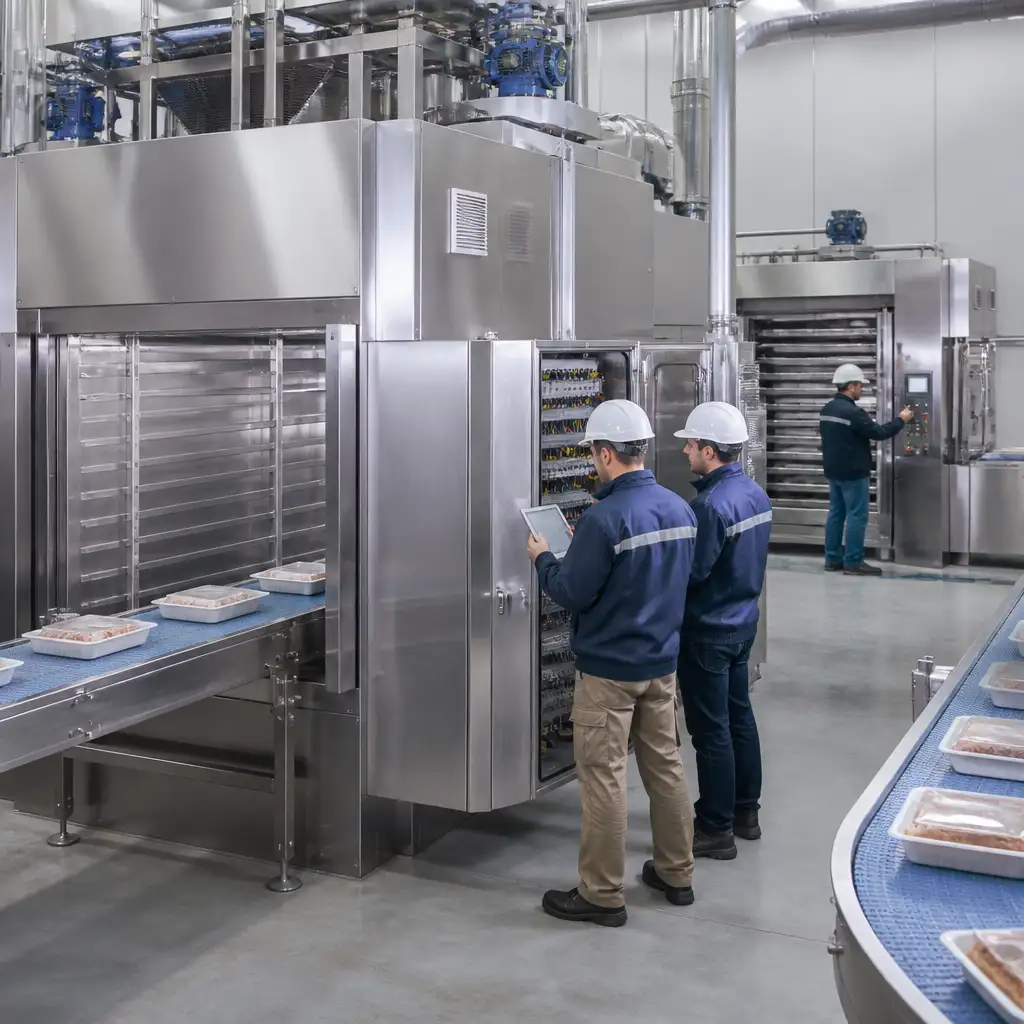
Seasonal production surges change the demands on freezing and cold storage systems in several ways: higher continuous throughput requirements, more frequent door cycles in cold rooms, and variable product profiles (size, packing density, and required core temperature). Blast freezer capacity planning must account for both the immediate peak load and the long-run average to avoid oversized capital projects or repeated last-minute fixes.
Two primary freezing technologies are common in seafood processing: plate freezers and blast (air) freezers. Plate freezers offer direct-contact freezing that is efficient for block-frozen product or single-layer packs, while blast freezers use high-velocity cold air and conveyors to freeze irregular shapes and palletized loads. Each has different space, refrigeration, and conveyor requirements that impact system design and integration.
Effective planning requires translating seasonal forecasts into engineering parameters: required kilogram-per-hour throughput, target core temperature, allowable dwell time, and staging requirements. Those parameters drive decisions about freezer type, refrigeration capacity, layout, and control strategies.
Why It Matters
Insufficient blast freezer capacity leads to queuing product, longer hold times at warm temperatures, and higher risk of quality loss or microbial growth. For processors handling high-value seafood, even small quality degradations can translate into significant revenue losses and reputational impact with buyers and distributors.
From an operational perspective, bottlenecks increase labour costs, complicate scheduling, and force emergency measures—such as renting portable freezers or diverting product to third-party cold storage. Those stop-gap measures often carry higher per-unit costs and increase handling risk, which defeats the purpose of streamlined, in-plant processing.
Proper blast freezer capacity planning balances capital expenditures against operational risk, aiming to ensure that peak season demand is met without unnecessary overcapacity during slow months. A well-engineered solution also lowers energy use per unit of frozen product and reduces wear on equipment through controlled staging and load management.
Common Causes or Industry Considerations
Several recurring factors contribute to seasonal bottlenecks in seafood plants:
- Underestimated peak throughput in original design or changes in catch patterns that increase volume.
- Mismatch between freezer type and product—using plate freezers for items better suited to blast freezing or vice versa.
- Inadequate refrigeration capacity or poor integration between compressor plant and evaporator loads, leading to insufficient delta-T under high load.
- Poor conveyor design or controls that create imbalances in product flow, manual handling delays, or inconsistent dwell times.
- Limited cold storage staging space, causing freezer queuing and door cycling that degrades refrigeration performance.
Other considerations specific to seafood processing include salt spray corrosion in marine facilities, variable product moisture that affects heat transfer, and HACCP-driven traceability and sanitation needs that influence freezer and conveyor layout. Electrical capacity and motor control availability may also limit options for adding VFD-driven conveyors or supplemental refrigeration.
Engineering or Operational Solutions
Addressing seasonal bottlenecks requires a layered approach: first reduce avoidable load, then optimize existing systems, and finally add capacity—permanent or temporary—based on quantified needs.
1) Accurately define required throughput. Convert seasonal forecasts into required net freezing capacity in kg/hr, factoring in product thermal load, heat of fusion, and blanch or wash water carryover. Work with engineering resources to translate these numbers into evaporator duty and compressor capacity requirements.
2) Optimize existing systems. Improvements that often yield rapid returns include: reducing air infiltration with improved staging doors and air curtains, repairing or upgrading seals, balancing airflow across evaporators, and tuning controls. Installing Variable Frequency Drives (VFDs) on fans and conveyors allows flexible control of air velocity and throughput to match ebb and flow.
3) Integrate refrigeration and conveyors. True capacity is the product of freezing rate and conveyor throughput. Ensure conveyors are sized for the product and use automated staging controls to prevent pile-ups at the freezer entrance. Coordinate PLC logic so refrigeration setpoints and fan speeds ramp with conveyor occupancy to maintain target product core temperatures without wasting energy.
4) Choose the right technology for the product. Plate freezers are space-efficient for block or pack freezing with high contact heat transfer, while blast freezers offer versatility for racks, trays, and pallet loads. Hybrid solutions—plate freezers for blocks plus blast tunnels for variable loads—can maximize utilization.
5) Consider temporary or modular capacity for known seasonal spikes. Options include refrigerated sea containers or portable blast tunnels that connect to on-site refrigeration or independent packaged systems. Temporary units can be deployed faster and at lower CAPEX but require planning for power, refrigerant piping or glycol, and integration with sanitation protocols.
6) Upgrade central refrigeration when necessary. Adding compressor capacity, heat rejection capacity (condensers or cooling towers), or switching to higher-efficiency compressors and controls can increase system headroom. For larger expansions, evaluate low-GWP refrigerant options such as CO₂ cascade systems or ammonia with appropriate safety controls, acknowledging differing regulatory and maintenance needs.
Best Practices
Adopt these practical best practices to make blast freezer capacity planning more predictable and resilient:
- Plan 9–18 months ahead for permanent expansions. Engineering, permitting, equipment lead times, and installation often require extended schedules—especially when modifying plant utilities or refrigeration plants.
- Model scenarios. Run at least three capacity scenarios—baseline, expected peak, and extreme peak—and size temporary or permanent solutions accordingly. Use conservative heat load assumptions for product variability and door cycles.
- Design for modularity. Where possible, use modular freezer sections, packaged refrigeration skids, and standardized conveyor modules so capacity can be added incrementally over seasons.
- Coordinate electrical and mechanical upgrades together. Freezer additions often require transformer upgrades, additional starters, or new MCC capacity; plan these in phase with refrigeration work to reduce rework and downtime.
- Implement robust controls and data logging. PLC-based control with automated alarms and trending helps operators maintain consistent product quality and provides documentation for process reviews and HACCP verification.
- Focus on preventive maintenance. Regular inspection of evaporators, fans, compressor oil analysis, and conveyor drive components reduces the probability of in-season failures that compound capacity problems. For preventive maintenance, see NEMES’ preventive maintenance offerings.
How NEMES Helps
NEMES assists seafood processors through an integrated approach combining engineering, equipment sales, supply, and responsive field service. Our engineering team works with plant managers to translate seasonal production forecasts into precise equipment specifications and system designs—helping avoid oversizing or under-provisioning.
We guide equipment selection and manufacturer matching so facilities choose the right plate freezers, blast tunnels, conveyors, and controls for their product profile. Our long-standing relationships with trusted manufacturers enable practical, application-specific recommendations rather than one-size-fits-all proposals.
On the services side, NEMES provides field commissioning, preventive maintenance support, emergency repairs, and system tuning to ensure newly installed or existing refrigeration plants and conveyors operate at designed capacity. We coordinate electrical and refrigeration upgrades to reduce installation time and help manage risks during peak season.
When temporary capacity is the right answer, NEMES can help source packaged blast freezers or refrigerated containers and assist in integrating them with on-site utilities, controls, and sanitation workflows. From specification through startup, our goal is to support long-term, reliable performance rather than simply selling components.
For project initiation or technical discussions, contact our equipment sales and engineering group to arrange an evaluation and planning session.
Conclusion
Seasonal bottlenecks in seafood processing are predictable problems that respond well to rigorous capacity planning. The right mix of product-appropriate freezing technology, refrigeration headroom, conveyor integration, and automation can smooth seasonal peaks and protect product quality. Temporary modular solutions provide flexibility for shorter-term surges, while permanent upgrades yield operational benefits across seasons.
Start planning early, base decisions on measured throughput requirements, and integrate refrigeration, electrical, and control upgrades to maximize reliability. With careful engineering and preventive maintenance, processors can reduce product loss, increase throughput, and lower the total cost of ownership for freezing and cold storage assets.
For assistance in evaluating freeze capacity, equipment selection, or phased expansion planning, reach out to our engineering team to discuss next steps.
contact NEMES to request engineering support or project consultation.
Frequently Asked Questions
Q: How far in advance should I plan for a permanent blast freezer expansion?
A: Plan 9–18 months ahead for permanent expansions to accommodate engineering design, equipment lead times, permitting, and installation. Complex refrigeration plant upgrades may require the upper end of that range.
Q: When is a plate freezer preferable to a blast freezer?
A: Plate freezers are ideal for uniform, packaged, or block-frozen products where direct contact freezing gives higher heat transfer. Blast freezers are better for irregular shapes, racks, trays, and pallet loads that require airflow-based freezing.
Q: Can temporary refrigerated containers be integrated with an existing refrigeration plant?
A: Yes—temporary units can be tied into a plant’s glycol or refrigerant systems with proper engineering. Ensure electrical supply, sanitary access, and control integration are considered in the scope.
Q: What role do VFDs and automation play in capacity planning?
A: VFDs allow dynamic control of fan and conveyor speeds to match throughput and maintain consistent freeze profiles, improving energy efficiency and preventing bottlenecks. PLC-based automation coordinates staging, alarms, and data logging for repeatable performance.
Q: How do I estimate the refrigeration capacity needed for a seasonal peak?
A: Convert the peak kg/hr throughput into sensible and latent heat loads using product-specific parameters. An experienced refrigeration engineer will translate those loads into evaporator duty and compressor sizing while accounting for door cycles and safety margins.
Q: What maintenance practices most reduce the risk of in-season freezer failures?
A: Regular evaporator coil cleaning, fan and motor inspection, compressor oil analysis, conveyor drive checks, and pre-season system performance tests significantly reduce in-season failures. Structured preventive maintenance keeps equipment performing at rated capacity.
Selecting the right equipment is critical to long-term performance and reliability. If you’re evaluating new systems or replacing aging components, NEMES can help you identify solutions that fit your operational requirements. Call (800) 540-8893 or email info@nemesinc.com to speak with our experienced team.