This guide explains detection technologies (electrochemical, infrared, catalytic and ultrasonic), sensor placement, alarm strategy, integration with controls and monitoring, and maintenance considerations. It focuses on practical selection criteria and operational impacts so you can specify systems that meet safety, reliability, and lifecycle cost goals.
Understanding the Challenge
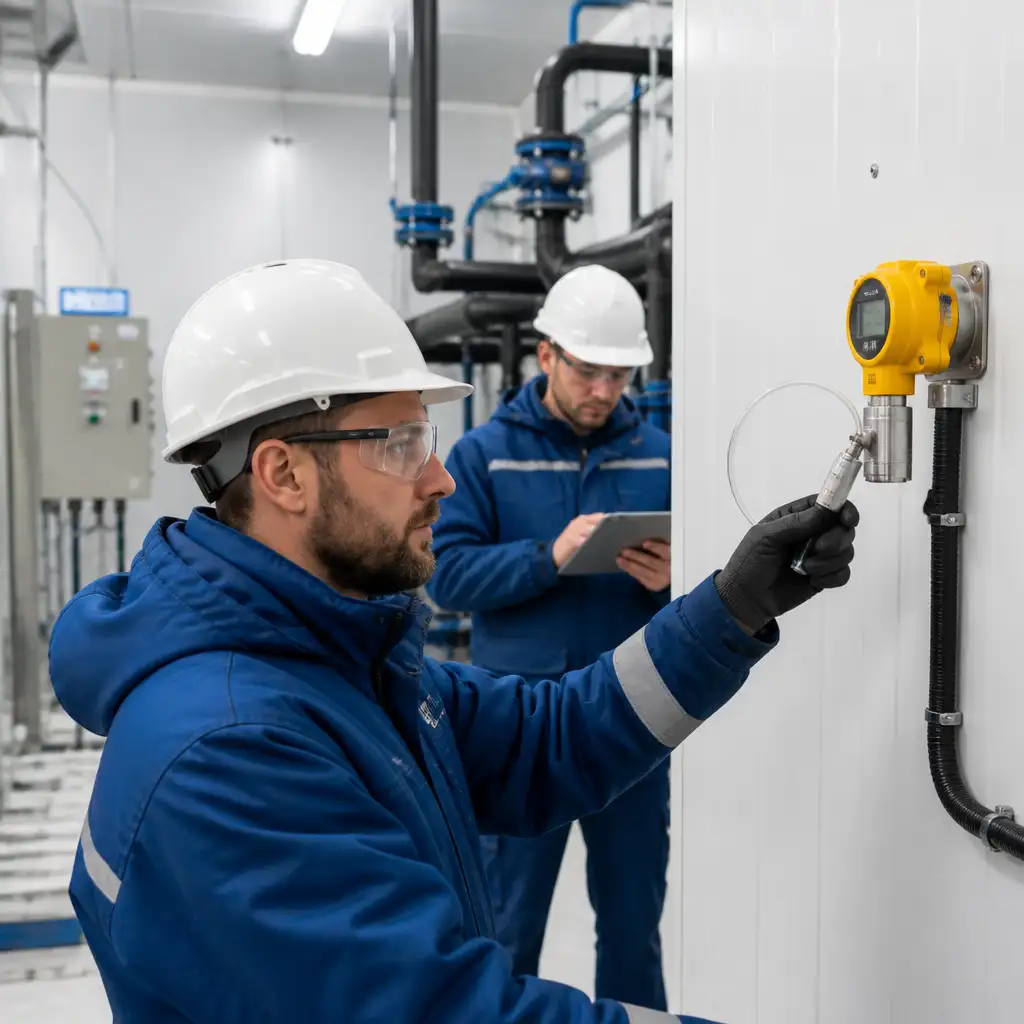
Refrigerant leaks present three simultaneous concerns: worker safety, product loss (and downtime), and regulatory exposure. Ammonia (NH₃) and CO₂ (R-744) are common in industrial refrigeration because of their thermodynamic efficiency, but they have different physical behavior and detection requirements. Ammonia is toxic at relatively low concentrations and is lighter than air; CO₂ is an asphyxiant and heavier than air, which affects where sensors should be installed.
Procurement decisions must therefore account for gas properties, the operational layout of mechanical rooms and cold aisles, and how detection integrates with ventilation, compressor shutdowns, and building automation—especially when uptime is a priority. Early detection at low ppm (parts per million) levels helps avoid escalation to hazardous concentrations and reduces the need for emergency shutdowns.
When initiating a specification, include clear requirements for sensitivity, communications, certification (for the gas being detected), and expected maintenance intervals. Linking detection strategy to operational procedures and automated interlocks reduces human error and shortens response time when leaks occur. Consider available manufacturer options as part of your procurement package; see NEMES’ equipment recommendations for system selection and specification guidance.
For procurement teams that need product sourcing, NEMES provides engineering consultation and equipment sales support to align detector choice with system architecture and safety goals.
Why It Matters
Timely detection protects personnel and property. Low-level monitoring enables corrective actions—isolating circuits, increasing ventilation, or dispatching service—before concentrations reach hazardous or evacuation thresholds. Faster detection also reduces refrigerant loss and potential product spoilage, both of which directly affect operating costs and uptime.
From a compliance perspective, many jurisdictions and industry codes require documented leak detection and alarm strategies for ammonia systems. Integrating detectors with alarm recording and maintenance logs helps demonstrate compliance and supports incident investigations. Procurement should therefore specify not only sensors but the data connectivity required for logging and reporting.
Operational reliability is another factor: sensors that drift, fail frequently, or lack calibration support create false alarms and unnecessary shutdowns, which erode confidence in the system. Selecting detectors with known maintenance profiles and reliable manufacturer support lowers lifecycle cost and keeps your refrigeration plant operating predictably.
Common Causes or Industry Considerations
Understanding where and how leaks occur helps define detection strategy. Common causes include: vibrational fatigue at fittings, corrosion in ammonia piping, failed seals on compressors, brazed-joint failures, accidental valve openings during maintenance, and mechanical damage. For CO₂ systems, high-pressure components and brazed joints are frequent sources of leaks.
Environmental factors matter: cold rooms with high humidity, frost, or ice can affect sensor housings and response times. Marine applications must consider motion, salt air corrosion, and confined engine spaces. Procurement managers should ask for detectors rated for the environment (IP rating, corrosion-resistant materials) and vendors with marine or cold-storage references.
Alarm strategy is influenced by plant layout. Large distributed facilities typically use zoned detection with local and central alarms, while smaller rooms may use wall- or ceiling-mounted detectors tied to local ventilation and door interlocks. The detection system should be designed so that a single sensor failure does not blind an entire zone.
Engineering or Operational Solutions
Choosing the right technology requires matching sensor principles to the target gas and application. The following table summarizes common detector technologies and their typical use cases.
| Technology | Best For | Strengths | Limitations |
|---|---|---|---|
| Electrochemical | Toxic gases (ammonia) | High sensitivity (ppm), compact, cost-effective | Limited lifespan (sensor drift), requires regular calibration |
| NDIR / Infrared | CO₂ and some refrigerants | Stable long life, selective for gases with IR absorption | Higher initial cost, optics require periodic cleaning |
| Catalytic bead | Hydrocarbon refrigerants | Robust for combustible gases | Not suitable for ammonia or CO₂ |
| Ultrasonic | High-pressure refrigerant leaks (sound-based) | Detects leaks independent of gas chemistry, good for pressurized lines | Does not measure concentration; used as a complementary technology |
Key design choices include:
- Sensitivity and detection thresholds — specify whether you need early warning (low ppm) versus action/evacuation thresholds tied to code or company policy.
- Sensor placement — mount sensors where gas will accumulate: near ceilings for ammonia, low points/under piping for CO₂, and adjacent to compressors, evaporators, and relief systems.
- Redundancy and zoning — deploy multiple sensors per zone and ensure graceful failure modes so one sensor failure does not disable protection.
- Communications and integration — require outputs like 4–20 mA, Modbus, BACnet, or relay contacts to tie detectors into building automation and refrigeration controls for automated ventilation and plant shutdowns.
Integration examples: tie NDIR CO₂ detectors to the building automation system for continuous logging and historical trend analysis, and configure electrochemical ammonia detectors with local relays to trigger ventilation fans and shut down compressors when defined alarm levels are reached.
Best Practices
Procurement specifications should include operational and maintenance expectations as much as sensor performance. Best practices include:
- Define alarm setpoints in ppm or percent by volume and align them with local codes, IIAR guidance for ammonia systems, and your internal emergency procedures.
- Specify calibration and maintenance intervals in the contract. Electrochemical sensors typically require annual calibration or bump tests; NDIR sensors often have longer intervals but need routine optical checks.
- Require communication protocols and integration testing to ensure detectors interact properly with automation, emergency ventilation, and compressor interlocks.
- Include commissioning checks and documented acceptance testing, including functional tests of alarms, interlocks, and data logging.
- Plan for spare sensors and a calibration service contract to minimize downtime when replacements or field calibration are needed.
Operational examples worth specifying: automated staged alarms (pre-alarm, action, evacuation), automatic ventilation activation at the action level, and lockouts for compressors to limit refrigeration charge redistribution during an event. These strategies reduce the need for broad shutdowns while protecting people.
For preventive planning, tie leak detection maintenance into your broader preventive maintenance program and ensure detectors are included in service routes and inventory planning so replacements are available quickly.
How NEMES Helps
NEMES combines engineering consultation, equipment selection, and field service to help organizations specify and deploy effective refrigerant leak detection systems. Our engineering team can assist with sensor type selection, placement plans, alarm strategies, and integration requirements so specifications match operational realities.
Through our equipment sales division we source detectors from trusted manufacturers and provide product recommendations tailored to marine refrigeration, industrial refrigeration, and commercial refrigeration projects. We also coordinate manufacturer relationships via our trusted manufacturers to ensure appropriate certifications and service support are available for the selected devices.
Our field service and calibration teams perform commissioning, scheduled calibration, preventive maintenance, and emergency troubleshooting. That means detectors are commissioned correctly, integrated with controls, and maintained on a predictable schedule to reduce false alarms and unexpected downtime.
When you need spare sensors, parts, or quick replacement components—especially for marine or cold-storage environments—our marine and industrial supply store and supply network can often provide the required items quickly. For projects that require a documented maintenance and calibration program, NEMES can develop those specifications and execute them as part of an ongoing service agreement.
Conclusion
Procurement managers and facility leaders must evaluate refrigerant leak detection systems for sensitivity, technology suitability, sensor placement, integration with controls, maintenance needs, and alarm strategy. For ammonia and CO₂ systems, choose detectors matched to gas chemistry—electrochemical for ammonia and NDIR for CO₂—while using ultrasonic tools for pressurized leak detection when appropriate.
Specification clarity prevents downstream issues: require communications protocols, calibration intervals, commissioning testing, and spare-part provisioning. This approach limits false alarms, preserves uptime, and supports compliance with local codes and industry guidance.
When selecting equipment, involve engineering and service resources early to verify that detection systems will interface correctly with ventilation, refrigeration controls, and building automation. NEMES can help evaluate options, source appropriate detectors, and provide the commissioning and preventive maintenance needed to keep systems reliable.
For tailored guidance on selecting and implementing refrigerant leak detection systems for your operation, please contact NEMES to request engineering support and product recommendations.
Frequently Asked Questions
Q: Which detector technology is best for ammonia systems?
A: Electrochemical sensors are the common choice for ammonia because they measure low ppm concentrations with good sensitivity. For complete coverage, pair fixed electrochemical detectors with ultrasonic leak surveys for pressurized components.
Q: How often should detectors be calibrated?
A: Calibration intervals depend on sensor type and environment. Electrochemical sensors commonly require annual calibration or bump testing; NDIR sensors have longer life but still need periodic checks. Specify calibration schedules in procurement documents.
Q: Where should CO₂ detectors be placed?
A: CO₂ is heavier than air and tends to settle in low points. Place detectors near floors, under piping runs, inside pits, and at locations where CO₂ could accumulate, plus near compressors and relief devices.
Q: Can detectors tie into building automation systems?
A: Yes. Most modern detectors provide 4–20 mA, Modbus, BACnet, or relay outputs so they can integrate with BAS, refrigeration controls, and alarm panels for automated ventilation and shutdown sequences.
Q: Are ultrasonic detectors a replacement for gas sensors?
A: No. Ultrasonic detectors identify pressurized leaks by sound and are excellent for locating leaks on compressors and piping, but they do not measure concentration. Use them alongside concentration sensors for a complete leak management program.
Selecting the right equipment is critical to long-term performance and reliability. If you’re evaluating new systems or replacing aging components, NEMES can help you identify solutions that fit your operational requirements. Call (800) 540-8893 or email info@nemesinc.com to speak with our experienced team.