Cold weather introduces specific risks to shore power connections and shipboard battery charging systems that can compromise safety, increase electrical faults, and cause costly port delays. For vessel owners, fleet managers, and port engineers, understanding how low temperatures affect cables, connectors, and charger performance is the first step toward improving shore power reliability during winter operations.
This article outlines the seasonal failure modes to watch for, explains why they matter operationally, and provides practical engineering upgrades—such as cable heating, shore power cable sizing, charger selection, and corrosion protection—that reduce fault rates and hold time in port. Where useful, we reference preventive maintenance, field diagnostics, and equipment sourcing options to help you make durable decisions for your fleet or facility.
When outages matter most, coordinated engineering, proper equipment selection, and responsive on-site service work together to preserve shore power reliability and keep vessels moving safely and on schedule.
Understanding the Challenge
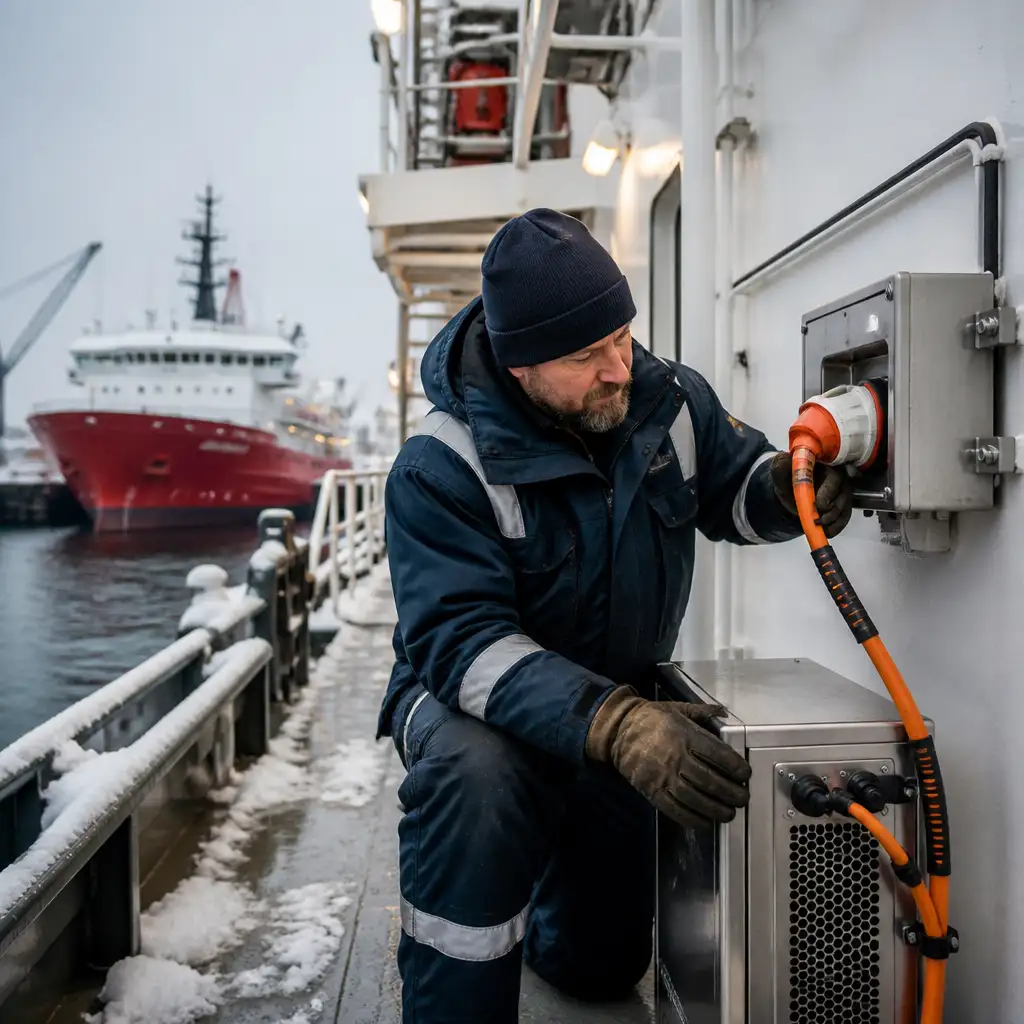
Shore power systems and battery chargers are designed to operate reliably within specified temperature ranges. In cold climates, these systems face mechanical, electrical, and electrochemical stresses that differ from warm-weather conditions. Examples include reduced cable flexibility leading to damage during handling, increased contact resistance at plug-and-socket joints from corrosion and contamination, and battery chargers that behave differently because of internal temperature-dependent control circuitry.
Cold-weather exposure amplifies latent issues. A marginal connector, undersized cable, or an aging charger may perform adequately in mild conditions but fail when temperatures drop and materials stiffen or contraction changes contact pressures. That’s why seasonal assessments are essential for shore power reliability.
Early identification of vulnerabilities—using visual inspections, infrared thermography, and on-site electrical diagnostics—helps planners prioritize engineering upgrades and minimize unscheduled repairs that extend port stay. Many operators complement these assessments with professional field service for targeted troubleshooting and emergency response.
Why It Matters
Shore power reliability directly impacts vessel turnaround time, safety, and lifecycle costs. Faults during transfer to shore power can trip distribution panels, stress onboard batteries, and in worst cases, present fire hazards if overheating occurs at connectors or in undersized cables.
Operational impacts include delayed offloading or loading, missed departure windows, and additional labor to diagnose and repair electrical faults in cold conditions. From a financial perspective, repeated failures increase repair costs, accelerate component replacement, and may trigger penalties tied to berth occupancy or charter agreements.
Beyond direct costs, unreliable shore power reduces confidence in port operations, complicates scheduling for tugs, pilots, and terminal staff. Investments in engineering upgrades that improve shore power reliability typically pay back by reducing downtime, lowering maintenance frequency, and increasing predictability in winter months.
Common Causes or Industry Considerations
Recognizing the most frequent failure modes helps prioritize effective interventions. Common cold-weather issues include:
- Stiff or brittle shore power cables that crack or sustain sheath damage when handled at low temperatures.
- Increased contact resistance at plug-and-socket interfaces due to corrosion, ice, or salt contamination—raising temperatures locally and causing trips.
- Undersized cable runs and poor voltage drop planning that worsen at low temperature because of increased inrush or charging currents during battery conditioning cycles.
- Battery chargers without temperature compensation or proper enclosures can undercharge or overheat, reducing battery life or tripping protective devices.
- Galvanic corrosion where dissimilar metals meet in a wet, saline environment—accelerated by winter spray and temperature cycling.
- Control and sensing circuits affected by condensation or cold-related contraction, leading to nuisance faults or incorrect measurements.
Operational factors—like rushed cable handling during tight turnarounds or failure to winterize shore pedestals—also contribute. An engineering-first approach considers both equipment and procedures to maintain shore power reliability.
Engineering or Operational Solutions
Targeted engineering upgrades address the root causes above. The most effective measures combine improved hardware selection, environmental protection, and controls that adapt to cold conditions:
- Cable heating and insulation: Use self-regulating heat-trace on exposed shore power cable sections and heated storage reels for shipboard cable. Thermal tracing prevents ice buildup on connectors and keeps cable flexibility within safe handling ranges.
- Proper shore power cable sizing: Re-evaluate cable ampacity and voltage drop for winter loads. Factor in higher inrush currents during battery charging and longer dwell times on shore power. Oversizing the cable where practical reduces conductor heating and decreases voltage drop under heavy charging cycles.
- Charger selection with temperature compensation: Specify battery chargers rated for low-temperature operation and with automatic temperature compensation for float and charge voltages. Chargers with rugged enclosures (NEMA/EN ratings) and conformal-coated electronics reduce faults from condensation and cold-induced stress.
- Connector and pedestal upgrades: Choose marine-grade shore power connectors with corrosion-resistant contacts and integrated seals. Consider heated pedestals or enclosure-mounted heaters to maintain internal temperatures above dew point and avoid ice formation.
- Galvanic isolation and bonding: Implement galvanic isolators, polarization monitoring, and proper bonding to limit electrochemical corrosion. Regular anode inspections and replacement schedules should be part of winter preventive maintenance.
- Load management and sequencing: Employ controlled charging sequences, soft-start chargers, or staggered shore-to-ship transitions to limit simultaneous inrush. Load-shedding logic reduces the risk of upstream trips and helps preserve shore power reliability.
- Diagnostics and monitoring: Install real-time monitoring—temperature, leakage current, contact resistance, and voltage drop—so crews and port engineers can spot deterioration before it causes faults.
Many of these solutions require coordination between ship operators and port authorities to ensure compatible hardware and agreed operational procedures. Equipment selection should be informed by engineering consultation to ensure charger and cable specifications match the vessel’s battery chemistry, capacity, and expected duty cycles.
Best Practices
Operational discipline complements engineering upgrades. Recommended best practices include:
- Scheduled winter inspections focused on shore power cables, connectors, pedestals, and chargers before the cold season begins.
- Routine infrared thermography on shore connections during charging to identify hot spots from elevated contact resistance.
- Standardized cable handling procedures and the use of protective covers for connectors while in use to limit contamination and freeze-up.
- Inventorying OEM replacement parts and critical spares—such as connector inserts, heating elements, and charger components—to shorten repair times. NEMES’ marine supply store keeps many common shipboard cables and accessories in stock for rapid replacement.
- Training crew and port technicians on winter-specific checks and safe shore power engagement steps to reduce human-error related faults.
- Documenting shore power procedures and using checklists for connection, charging, and disconnection sequences during freezing weather.
Combining preventive maintenance with modern monitoring tools reduces unexpected equipment failures and supports safer, more predictable operations in cold months.
How NEMES Helps
NEMES integrates engineering, equipment sales, supply, and field service to help customers improve shore power reliability and reduce port delays. Our approach begins with engineering consultation and system evaluation to identify weaknesses related to cable sizing, charger selection, connector condition, and pedestal environment.
We support specification and sourcing of shore power cable, heated reel solutions, and battery chargers rated for harsh marine environments through our equipment sales team and manufacturer relationships. When parts are needed quickly, our New Bedford marine and industrial marine supply store can provide in-stock shipboard cable and consumables to minimize downtime.
For on-site needs, NEMES offers field diagnostics, preventive maintenance, and emergency repairs. Our technicians perform thermal scans, contact resistance testing, and charger performance checks to isolate issues before they impact operations. We also work with port engineers to implement heater installations on pedestals, cable heat tracing, and protective enclosures.
Because many reliability improvements require integration between electrical systems and operational procedures, NEMES provides practical recommendations—balancing lifecycle costs, safety, and maintainability—rather than simple product substitutions. Our manufacturer partnerships and OEM sourcing capability ensure replacement chargers and components are compatible with vessel battery chemistries and control architectures.
Conclusion
Cold weather challenges to shore power and battery chargers are predictable and manageable with an engineering-first strategy. Key steps include assessing cable condition and sizing, selecting chargers with temperature compensation and rugged enclosures, protecting connectors from corrosion and ice, and deploying cable heating or heated pedestals where necessary. Complement these upgrades with monitoring, preventive maintenance, and trained personnel to reduce the likelihood of port delays and in-service electrical faults.
Proactive investment in shore power reliability reduces unscheduled repairs, extends equipment life, and preserves operational schedules when cold weather arrives. For vessel owners and port engineers, the combination of proper equipment selection, environmental protection, and responsive technical support is the most effective path to winter-ready shore power systems.
For tailored recommendations that consider your vessel’s battery systems, shore power infrastructure, and operational constraints, contact our engineering team to discuss a site evaluation and upgrade plan. You can also explore our stocked components and replacement parts if you need fast access to shipboard cable and charger components.
Frequently Asked Questions
How does cold weather increase shore power failures?
Low temperatures make cable jackets stiff, increase contact resistance in connectors, and promote condensation or ice that interferes with electrical contacts—leading to trips or overheating at connection points.
Should I oversize shore power cable for winter operations?
Oversizing can reduce voltage drop and conductor heating under heavy charging loads. Decisions should be based on engineering calculations that factor in inrush currents, run length, and vessel charging profiles.
What features should I look for in a battery charger for cold climates?
Choose chargers with automatic temperature compensation, rugged weatherproof enclosures, low-temperature component ratings, and remote monitoring or alarm outputs to detect performance issues early.
Can cable heating prevent connector freeze-ups?
Yes. Self-regulating heat trace on exposed cable runs and heated pedestals reduce ice formation and keep connectors within operational temperature ranges, improving connection reliability.
How often should I inspect shore power connectors in winter?
At minimum, perform visual and functional checks before the start of winter and then at regular intervals during heavy use. Use infrared scans when charging to spot hot spots indicating elevated resistance.
Who can help with emergency shore power faults during cold weather?
Field service teams that offer troubleshooting, diagnostics, and emergency repairs can respond quickly to restore shore power reliability; establish a service plan in advance for winter seasons.
[CTA 4 — Marine Industry]
Commercial vessels depend on reliable equipment every day. From refrigeration and electrical systems to pumps, controls, and onboard equipment, NEMES provides engineering expertise, quality products, and responsive service to help keep your vessel operating efficiently. Call 508-999-0162 or email info@nemesinc.com for marine engineering, equipment, or service assistance.